
Vinyl Fence Installation in Portland
Zero-maintenance fencing that never needs painting, staining, or sealing — built to handle Portland’s rain, wind, and moss without lifting a finger.
Why Vinyl Excels in Portland's Climate
Vinyl fencing has earned its place as the leading maintenance-free fencing material in Portland. In a city where eight months of rain, pervasive moss growth, and damp conditions destroy untreated wood within years, vinyl stands up to every challenge our climate throws at it. It does not rot, warp, crack, peel, fade, or support mold or algae growth. It never needs painting, staining, or sealing. You install it once and enjoy it for 25-30 years with nothing more than an occasional rinse with a garden hose.
Next Level Decks & Exteriors installs vinyl fences across the Portland metro area in privacy, semi-privacy, picket, and ranch rail styles. We use premium vinyl products from leading manufacturers — not the thin, brittle vinyl sold at big-box stores. Our vinyl fencing has reinforced internal channels, UV stabilizers to prevent fading and yellowing, and impact modifiers that maintain flexibility in cold weather.
For Portland homeowners who want a beautiful, long-lasting fence without any ongoing maintenance commitment, vinyl is the right choice. The higher upfront cost compared to wood is recovered within 5-7 years when you factor in the staining, sealing, and board replacement that wood fences require.

Lifetime
Warranty
0
Maintenance Required
100%
Moisture Proof
Why Vinyl Excels in Portland's Climate
Portland’s climate presents specific challenges that vinyl handles better than any other fencing material:
Rain and Moisture: Vinyl is completely non-porous. It does not absorb water, swell, or create the damp conditions that support fungal growth and rot. While wood fences in Portland are in a constant battle against moisture, vinyl is unaffected. Rain, irrigation overspray, and ground moisture have zero impact on vinyl’s structural integrity or appearance.
Moss and Algae: Portland’s shaded, damp conditions grow thick moss and green algae on wood surfaces within months. Vinyl’s smooth, non-porous surface resists moss attachment. Any green growth that does develop on vinyl wipes off easily with a garden hose or a mild detergent spray — no scrubbing, no power washing, no chemical treatments needed.
Freeze-Thaw Cycles: Portland’s winters hover around freezing with occasional cold snaps into the 20s. Unlike wood, which absorbs water and can crack during freeze-thaw cycles, vinyl does not absorb moisture. Modern vinyl formulations include impact modifiers that maintain flexibility down to -20°F, well below any temperature Portland experiences.
Wind: Portland’s windstorms, particularly the East Gorge wind events, test every fence. Vinyl fence panels are designed to flex slightly in wind rather than resist rigidly like wood. This flexibility actually helps vinyl survive windstorms that snap rigid wood boards. However, proper post installation with adequate concrete footings is still essential — vinyl panels are only as wind-resistant as the posts supporting them.
Wood vs. Vinyl: Side-by-Side
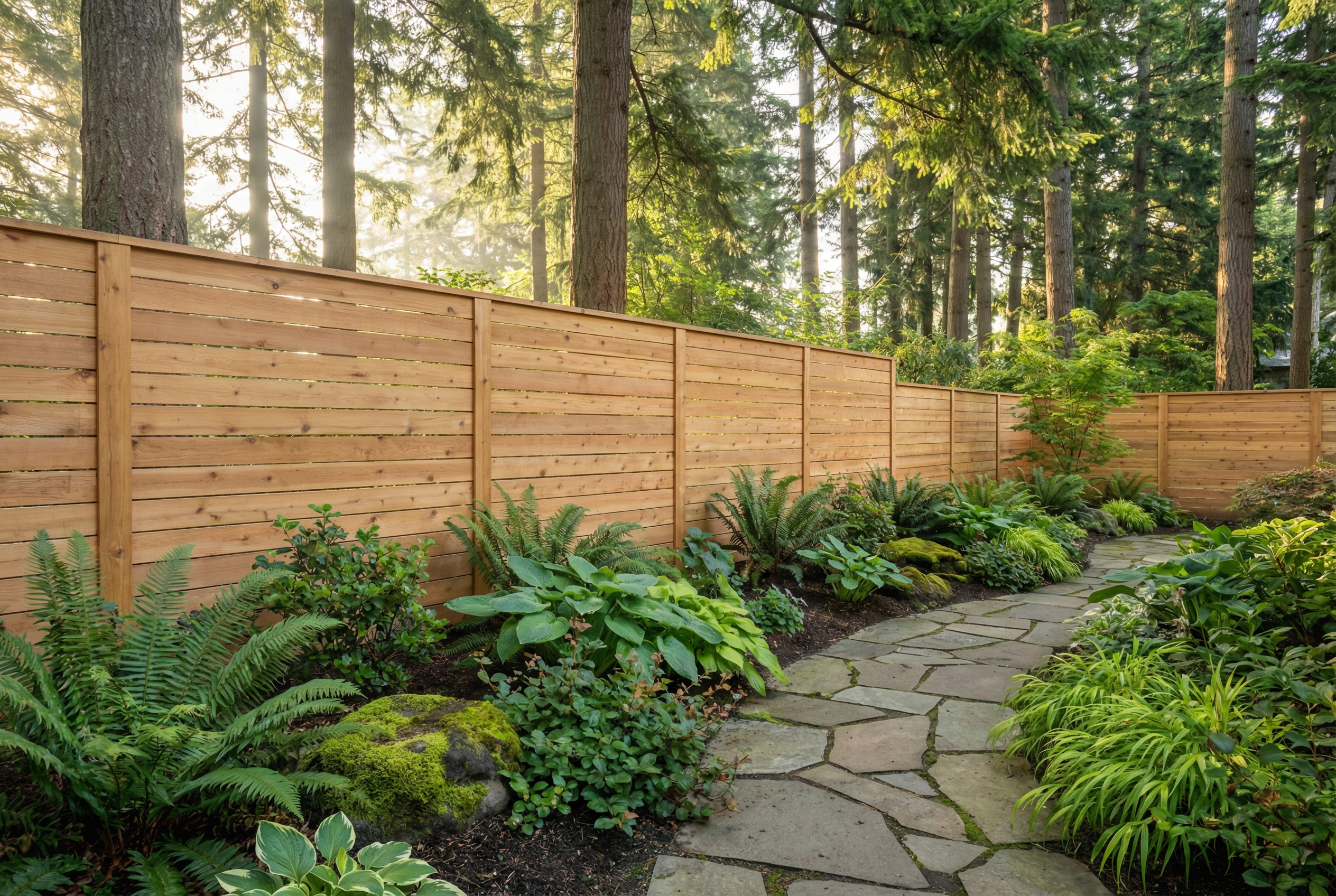
When comparing vinyl and wood fences in real-world Portland installations, the differences become clear. A well-maintained wood privacy fence offers natural warmth and character, while vinyl delivers consistent color and zero maintenance year after year. We install both materials and can help you choose the right option based on your budget, aesthetic preferences, and long-term maintenance expectations.
Vinyl Fence Styles & Colors
Modern vinyl fencing offers far more variety than the plain white panels of 20 years ago. Today’s vinyl comes in multiple styles, heights, colors, and textures to complement virtually any Portland home:
Privacy: Solid panels with no gaps between boards. Available in tongue-and-groove profiles (clean, smooth surface) and board-on-board profiles (overlapping boards for a more traditional look). Heights from 4 to 8 feet. This is our most popular vinyl style for Portland backyard fences.
Semi-Privacy: Panels with narrow gaps between boards that allow air circulation while providing significant visual screening (approximately 70-80% privacy). A good compromise between full privacy and an open feel, and the gaps reduce wind load on the fence.
Picket: Classic pointed or flat-top pickets for front yards, gardens, and decorative boundaries. Available in 3-4 foot heights. Picket vinyl fences maintain their crisp appearance indefinitely — no sagging, no peeling paint, no replacement needed.
Ranch Rail: Two- or three-rail horizontal fencing for large lots, rural properties, and horse fencing. Available with or without wire mesh infill for animal containment.
Colors: White remains the most popular vinyl fence color, but the palette has expanded significantly. We install vinyl fencing in white, almond/tan, clay, gray, khaki, and several wood-grain textured options that mimic cedar or walnut from a distance. The dark and wood-tone colors are ideal for Portland homeowners who want the maintenance-free benefits of vinyl with a more natural appearance.
Vinyl vs. Wood: The Portland Cost Comparison
Vinyl fencing costs more upfront than wood, but the total cost of ownership over the fence’s lifespan tells a different story:
Upfront Cost: A 6-foot vinyl privacy fence typically costs $30-$55 per linear foot installed, compared to $25-$45 for cedar. For a 200 linear foot fence, that is roughly $1,000-$2,000 more for vinyl.
Maintenance Cost Over 25 Years: A cedar fence in Portland needs staining every 2-3 years at approximately $2-$4 per linear foot per application. Over 25 years, that is 8-12 staining cycles at $400-$800 each — a total maintenance cost of $3,200-$9,600. A vinyl fence costs $0 in maintenance over the same period.
Board Replacement: Wood fences inevitably need individual board replacements as boards rot, crack, or warp. Budget $200-$500 in board replacements every 5-7 years for a typical Portland wood fence. Over 25 years, that adds $700-$2,500 in repair costs. Vinyl requires zero board replacements.
Total 25-Year Cost: When you add installation, maintenance, and repairs, a cedar fence costs $11,000-$21,000 over 25 years. A vinyl fence costs $6,000-$11,000 — roughly the same as or less than the initial installation cost. Vinyl wins decisively on lifetime value.
Resale Consideration: Both wood and vinyl fences add value to Portland homes. Some buyers prefer the natural look of wood; others prefer the guaranteed low-maintenance of vinyl. Neither material has a clear advantage in resale value — it depends on the buyer’s preferences.

Complete Outdoor Living Solutions
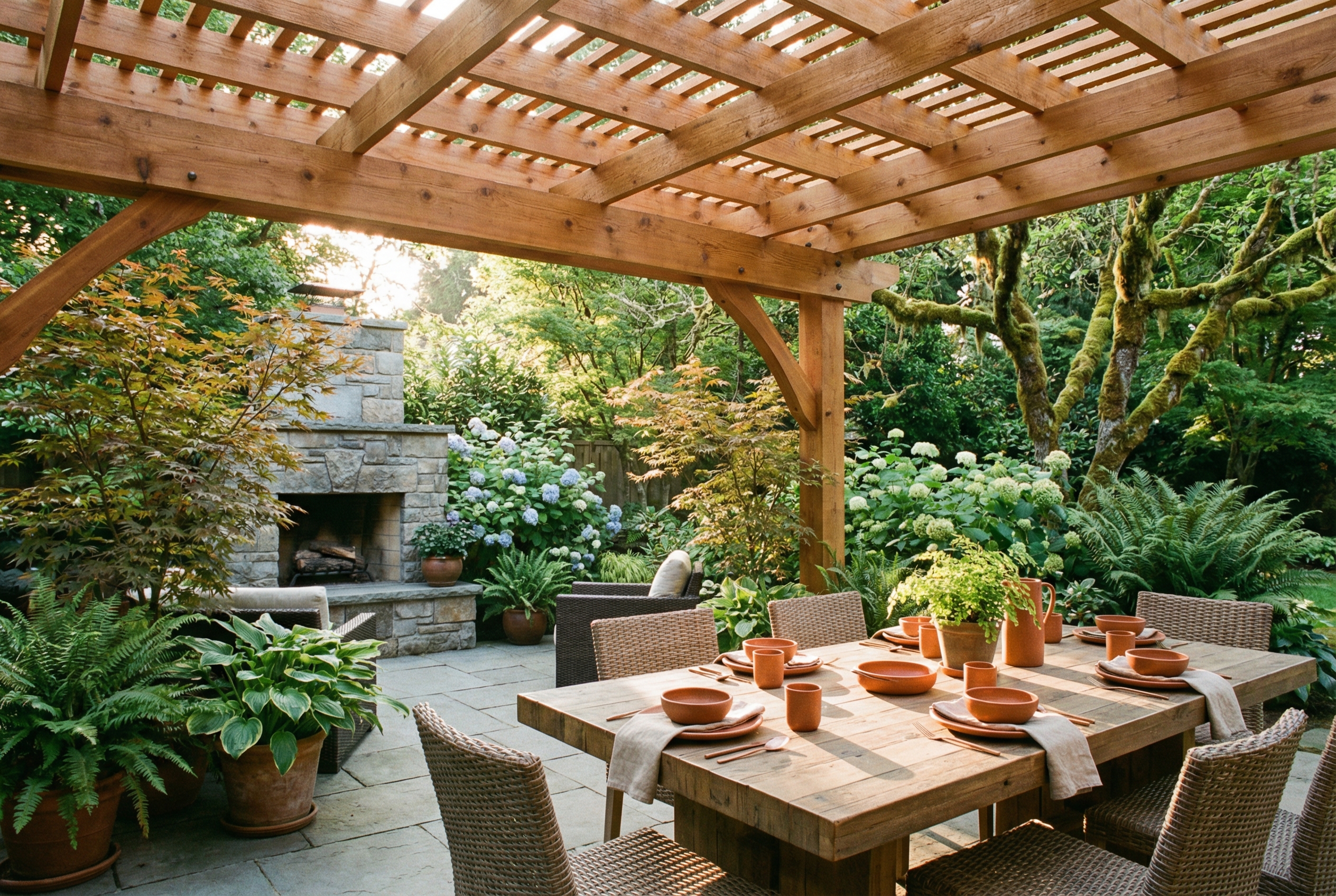
A vinyl fence is often just one piece of a larger outdoor living project. Many of our Portland clients pair their new vinyl fence with a deck, patio cover, or outdoor kitchen to create a private backyard retreat. We design and build complete outdoor living spaces — from the fence line to the deck surface — so every element works together as a cohesive, functional whole.
Wind Rating & Structural Considerations
Portland’s windstorms demand that vinyl fences be installed with proper structural engineering. The fence panels may be maintenance-free, but the posts and footings are what hold the fence up in 60+ mph winds.
Post Installation: We set vinyl fence posts with aluminum or steel reinforcement channels inside the hollow vinyl post sleeve. This internal reinforcement provides the rigidity and strength that vinyl alone cannot achieve. Posts are set in concrete to a minimum depth of 30 inches (deeper than standard wood fence posts) to resist the wind loads that solid vinyl panels experience.
Wind Load Design: Solid privacy panels present the maximum wind load because they catch the full force of the wind with no gaps for air to pass through. We space posts at a maximum of 6 feet on center (standard is 8 feet for many manufacturers) and use thicker-gauge aluminum reinforcement in wind-exposed locations. For properties in the Columbia Gorge wind corridor (Troutdale, Wood Village, Fairview), we specify heavy-duty wind-rated panels and may reduce post spacing to 5 feet.
Gate Posts: Vinyl gate posts receive extra-heavy reinforcement and deeper footings. A gate that swings in the wind puts enormous cyclic stress on the hinge post. We use steel pipe reinforcement (not just aluminum channels) for all vinyl gate posts and set them in a minimum of 36 inches of concrete.
Quality Differences in Vinyl Fencing
Not all vinyl fencing is created equal. The thin, lightweight vinyl panels sold at big-box stores for bargain prices are a different product from the commercial-grade vinyl we install. Here is what separates premium vinyl from budget vinyl:
Wall Thickness: Premium vinyl fence components have wall thicknesses of 0.100 inches or more. Budget vinyl may be as thin as 0.060 inches. Thicker walls mean greater impact resistance, better wind performance, and longer life. The difference is immediately obvious when you handle the panels — premium vinyl feels solid and rigid, while budget vinyl flexes like a plastic sheet.
UV Stabilizers: All vinyl fencing includes titanium dioxide (TiO2) for UV protection. Premium products use 10-12 parts per hundred (pph) of TiO2, while budget products may use as little as 3-5 pph. The difference shows up after 5-10 years in Portland’s UV exposure — budget vinyl yellows and becomes brittle, while premium vinyl maintains its color and flexibility.
Impact Modifiers: Premium vinyl includes acrylic or rubber-based impact modifiers that maintain flexibility in cold weather. This is important in Portland, where winter temperatures can drop into the 20s. Budget vinyl without adequate impact modification can crack from a hard impact (like a ball or branch strike) during cold snaps.
Warranty: Premium vinyl fencing carries a 25-year to lifetime transferable warranty covering fading, yellowing, peeling, blistering, and structural defects. Budget vinyl warranties may be limited to 10-15 years and are often non-transferable. We install only premium vinyl products with full manufacturer warranties.
Your outdoor space should be an extension of your home — not an afterthought.
Why Choose Next Level Decks & Exteriors
Premium Products Only: We install commercial-grade vinyl fencing with thick walls, full UV stabilizers, and impact modifiers — not the thin budget panels from hardware stores. Every product carries a 25-year or lifetime manufacturer warranty.
Wind-Engineered Installation: We reinforce every vinyl post with aluminum or steel channels and set them in 30+ inches of concrete. Our post spacing and reinforcement are designed for Portland’s wind conditions, not just the minimum manufacturer specification.
Complete Style Selection: Privacy, semi-privacy, picket, ranch rail, and specialty styles in white, tan, gray, and wood-grain colors. We help you choose the style and color that complements your home and meets your privacy needs.
Honest Material Advice: Vinyl is not the right choice for every property. If your home’s architecture calls for natural wood or if your HOA restricts vinyl, we will tell you. We recommend vinyl based on your specific situation, not just because it is available.
Frequently Asked Questions
Premium vinyl fencing with adequate UV stabilizers (10+ parts per hundred of titanium dioxide) does not yellow over its lifespan. It may develop a very slight color shift over 15-20 years, but it remains bright and clean-looking. Budget vinyl with insufficient UV stabilizers can yellow noticeably within 5-10 years. We install only premium vinyl products with full UV protection and 25-year color warranties.
Yes, when properly installed. We reinforce vinyl posts with aluminum or steel channels and set them in 30+ inches of concrete — deeper than typical wood fence installations. For wind-exposed properties (especially in the East Portland/Gorge corridor), we reduce post spacing and use heavy-duty reinforcement. Vinyl panels actually flex slightly in wind rather than resisting rigidly, which can help them survive gusts that snap rigid wood boards.
Most vinyl fence cleaning requires nothing more than a garden hose. For stubborn dirt, moss stains, or mildew marks, spray with a mild detergent solution (dish soap and water works fine), let it sit for a few minutes, and rinse off. For heavy staining, a magic eraser or vinyl fence cleaner removes virtually any mark. Never use abrasive pads or strong solvents, which can damage the smooth surface. Most Portland homeowners clean their vinyl fence once or twice a year.
Most Portland-area HOAs allow vinyl fencing, though some restrict colors (white and earth tones are usually approved) or styles. A few older HOAs may require wood or prohibit vinyl entirely. We recommend checking your CC&Rs before selecting vinyl and can help you navigate HOA approval if needed. The newer wood-grain textured vinyl products have been gaining acceptance in HOAs that previously required natural wood.
Yes. Individual vinyl panels and components can be replaced without replacing the entire fence. Because vinyl is manufactured in standard sizes and profiles, replacement panels from the same manufacturer match the existing fence exactly. We stock common panel sizes and can source specific replacement components within 1-2 weeks. Damage from impacts or extreme conditions is covered under most homeowner’s insurance policies.
Ready to Get Started?
Schedule a free on-site consultation. We’ll assess your property, discuss your vision, and provide a detailed estimate — no pressure, no obligation.