
Deck Railings & Balustrade Installation in Portland
From sleek cable railings to classic wood balusters, we install railing systems that combine safety, style, and code compliance.
Complete Outdoor Living
The right railing system transforms your deck from a simple platform into a true outdoor living space. Our composite and aluminum railing options complement any deck material, providing unobstructed views while meeting all local building code requirements for height and load capacity.

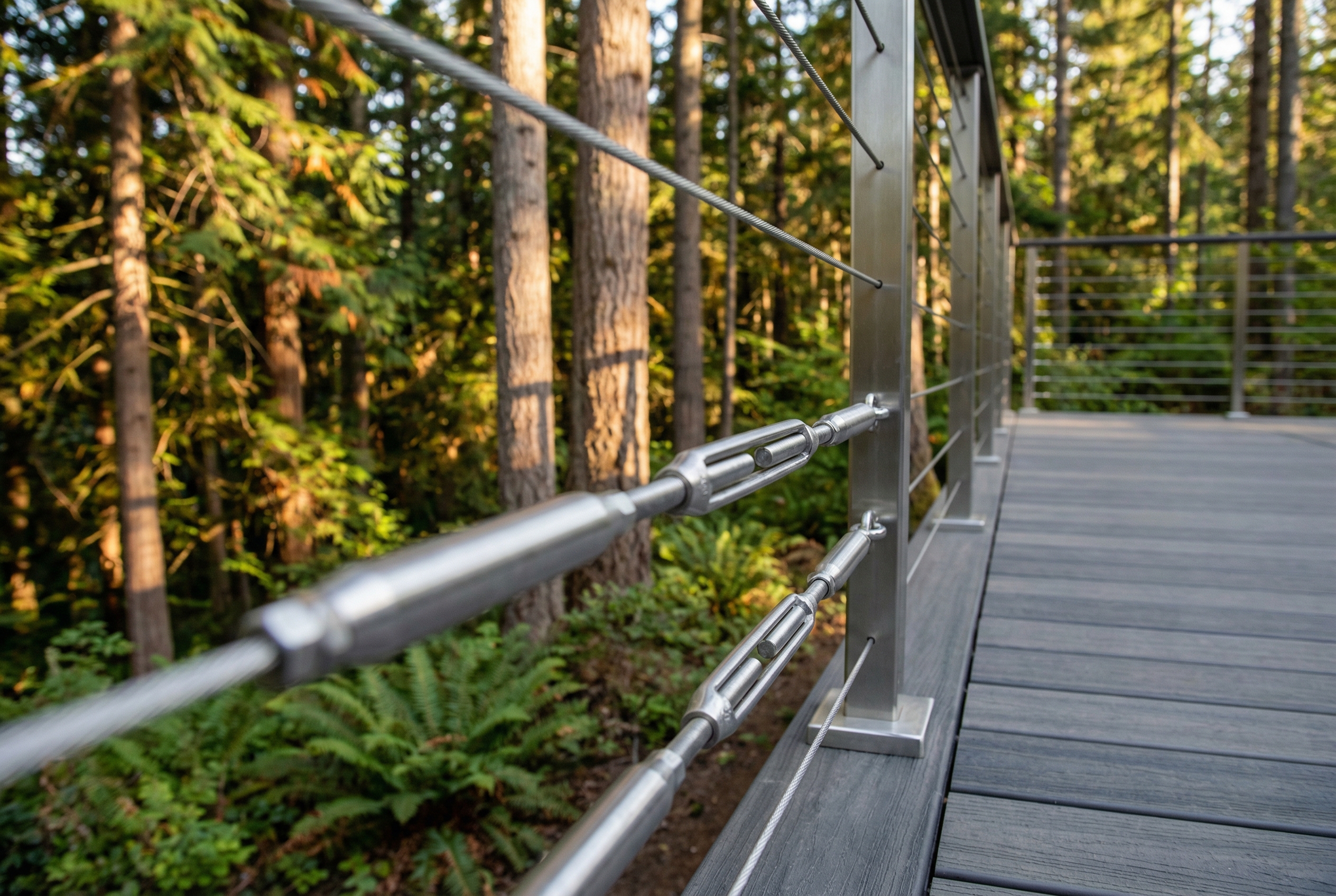
Premium Railing Details
Every railing installation by Next Level Decks features precision-crafted connections, consistent spacing, and premium materials that stand up to the Pacific Northwest climate. From sleek cable railings to classic wood balusters, we ensure every detail meets our exacting standards for both safety and aesthetics.
Cable Railing Systems
Railings are where safety meets design on your deck. Oregon building code requires guardrails on any deck surface 30 inches or more above grade, and the details matter — baluster spacing, post attachment, and top rail grip size are all regulated. But beyond code compliance, your railing choice dramatically impacts both the look of your deck and how much you enjoy the view from it.
Next Level Decks & Exteriors installs every major railing system available in the Portland market, from traditional wood balusters to modern cable and glass panel systems. We help homeowners choose the right railing for their deck style, view lines, maintenance preferences, and budget — then install it to meet or exceed the Oregon Residential Specialty Code.
Whether you are adding railings to a new deck build or upgrading the tired, wobbly railings on your existing deck, we handle the full scope: design consultation, material sourcing, structural post attachment, and final inspection coordination.
36"
Code Minimum Height
5+
Railing Styles
100%
Code Compliant
Cable Railing Systems
Cable railings have become the most popular premium railing choice in the Portland metro area, and for good reason. Thin stainless steel cables (typically 1/8-inch diameter) strung horizontally between posts provide code-compliant infill while virtually disappearing from view. If your deck overlooks Mt. Hood, the West Hills, or even a well-landscaped backyard, cable railings preserve the view that a wall of wood balusters would block.
How They Work: Cables are tensioned between terminal posts using threaded fittings or turnbuckles, typically at 3-inch vertical spacing to meet the 4-inch sphere rule (no gap large enough for a child to pass through). Posts are spaced at a maximum of 4 feet on center to prevent cable deflection. We use 316-grade marine stainless steel cable and fittings — not the cheaper 304 grade — because Portland’s wet climate accelerates corrosion on lesser materials.
Post Options: Cable railing posts come in wood (cedar or pressure-treated with a stainless cable kit), aluminum (powder-coated in black, bronze, or white), or stainless steel. Aluminum posts with stainless cables are the most popular combination in Portland — they offer a clean modern look with essentially zero maintenance.
Brands We Install: We are authorized installers for CableRail by Feeney, RailFX, Deckorators, and custom-fabricated systems. Feeney CableRail is our most-recommended system for its ease of tensioning and lifetime warranty on cables.
Cost Range: Cable railing systems typically run $60-$120 per linear foot installed, depending on post material and configuration. That is more than wood balusters but less than glass, and the maintenance savings over time are significant.
Glass Panel Railings
Glass panel railings offer the most unobstructed view of any railing system. Tempered safety glass panels (typically 3/8-inch or 1/2-inch thick) are set into aluminum posts or mounted with standoff hardware to create a transparent barrier that meets code while feeling almost invisible.
Tempered vs. Laminated: Building code requires tempered safety glass for deck railings. If a panel breaks, it shatters into small, relatively harmless pieces rather than dangerous shards. Some homeowners opt for laminated tempered glass (two layers bonded with an interlayer) which holds together if cracked, similar to automotive windshield glass. Laminated adds cost but provides extra security.
Maintenance in Portland: Glass panels in Portland will need cleaning more frequently than in drier climates. Rain deposits minerals, pollen collects in spring, and algae can develop on north-facing panels. A squeegee wipe every few weeks keeps them clear. We recommend applying a hydrophobic coating (like Rain-X) to the exterior face to help water sheet off rather than bead and leave spots.
Wind Considerations: Glass panels act as solid wind barriers, which can be a benefit (blocking the Columbia Gorge wind on east-facing decks) or a drawback (creating a sail effect in exposed locations). We evaluate wind exposure during the design phase and recommend reinforced post anchorage for high-wind sites.
Cost Range: Glass panel railing systems typically run $100-$200 per linear foot installed, making them the premium option. The aesthetic impact on modern and contemporary homes is significant.
Aluminum & Composite Railings
Aluminum Railings: Powder-coated aluminum railing systems offer an excellent balance of durability, clean appearance, and low maintenance. They will not rust, rot, warp, or need repainting — ever. Popular profiles include flat-top rails with square balusters (contemporary), round top rails with turned balusters (traditional), and picket-style with decorative spacing.
We install Westbury, Deckorators ALX, and Fortress Fe26 aluminum systems. Fortress Fe26 is a Portland favorite — its pre-welded panels install quickly, and the black finish gives a wrought-iron look without the rust risk. Colors available include black, bronze, white, and several metallic finishes.
Composite Railings: Composite railing systems from Trex, TimberTech, and Fiberon match their respective composite decking lines, creating a unified look. They resist moisture, insects, and UV fading, and never need staining or sealing. Composite railings come in wood-tone colors that mimic cedar, walnut, and weathered gray.
Composite is an excellent choice when you want the warmth of a wood appearance without the maintenance burden that Portland’s climate imposes on real wood. The trade-off is that composite railings feel slightly different to the touch than real wood — smoother and slightly warm to the touch in summer sun.
Wood Railings: Cedar & Pressure-Treated
Wood remains a classic choice for deck railings, especially on craftsman-style and traditional Portland homes. Cedar railings offer natural beauty with warm amber tones and aromatic character, while pressure-treated pine provides a budget-friendly option that accepts stain well.
Cedar Railings: Western red cedar is naturally resistant to rot and insects, making it the best wood species for Portland’s wet climate. However, it still requires regular maintenance — cleaning and re-staining every 2-3 years — to maintain its appearance and longevity. Left untreated, cedar turns silvery gray within 6-12 months, which some homeowners prefer as a deliberate aesthetic choice.
Pressure-Treated Railings: PT pine railings cost roughly half as much as cedar and accept stain well after an initial drying period (30-60 days after installation). They require the same maintenance cycle as cedar. PT lumber has improved significantly in recent years — modern micronized copper azole (MCA) treatment is less corrosive to fasteners than the old CCA formulations.
Baluster Styles: Wood balusters come in square stock (clean, modern), turned profiles (traditional), and flat board (craftsman). We also build custom patterns including X-patterns, horizontal boards, and mixed designs combining wood posts with metal or cable infill.
Portland Building Code Requirements for Deck Railings
Oregon adopts the International Residential Code with state amendments, administered locally by the City of Portland Bureau of Development Services (BDS) or your local jurisdiction. Here are the key railing requirements every Portland homeowner should know:
When Railings Are Required: Guardrails are required on any walking surface more than 30 inches above the adjacent grade. This includes decks, balconies, porches, and elevated landings. Stairs with more than three risers require a graspable handrail on at least one side.
Height Requirements: Residential deck guardrails must be at least 36 inches high, measured from the deck surface to the top of the rail. For decks on commercial properties or those more than 30 inches above grade in some jurisdictions, the requirement increases to 42 inches. Stair handrails are measured differently — 34 to 38 inches from the stair nosing.
Baluster Spacing (The 4-Inch Sphere Rule): No opening in a guardrail system can allow passage of a 4-inch sphere. This applies to the space between balusters, between the bottom rail and the deck surface, and between any decorative elements. This rule exists to prevent children from getting their heads stuck.
Post Attachment: Guard posts must be able to withstand a 200-pound concentrated load applied in any direction at the top of the post. This requires proper structural attachment — surface-mounted post brackets bolted through the rim joist, or posts notched around and bolted through the rim joist. Simply screwing or nailing posts to the outside of the deck framing does not meet code and is a safety hazard we frequently find on older Portland decks.
Top Rail Grip: The top rail must provide a graspable surface between 1.25 and 2 inches in cross-section if it also serves as a handrail (typically at stairs). Flat cap rails on level deck sections are not required to be graspable.
Your outdoor space should be an extension of your home — not an afterthought.
Why Choose Next Level Decks & Exteriors
Every Major System Available: We install cable, glass, aluminum, composite, and wood railing systems — and we have hands-on experience with all of them. We help you choose the right system for your home’s style, your view, and your budget.
100% Code Compliant: Every railing installation meets or exceeds Oregon building code. We handle permit applications and inspection coordination so you never have to worry about compliance issues when selling your home.
Structural Post Attachment: We never take shortcuts on post attachment. Every post is bolted through the deck structure with code-rated hardware, not surface-screwed. This is the difference between a railing that protects your family and one that fails when someone leans on it.
View-Line Optimization: We help Portland homeowners maximize their views. On decks overlooking the Willamette Valley, Mt. Hood, or wooded lots, the right railing choice can dramatically change your outdoor experience.
Frequently Asked Questions
Cable railing and glass panels offer the most unobstructed sightlines. Cable railings are the most popular view-preserving option in Portland due to their lower cost compared to glass and their excellent durability in our wet climate. The thin stainless steel cables virtually disappear at typical viewing distances, letting you enjoy your view of Mt. Hood, the West Hills, or your landscaped yard without visual interruption.
Oregon residential code requires a minimum guardrail height of 36 inches for residential decks and 42 inches for commercial applications. The measurement is taken from the deck walking surface to the top of the rail. For stairs, handrails must be 34 to 38 inches high, measured vertically from the stair nosing. Some homeowners choose to exceed the minimum for added safety, especially on elevated decks.
Yes, in most cases. We can retrofit cable railing systems onto existing decks by replacing the railing posts and infill while keeping the existing deck structure. The key requirement is that the existing posts or new posts must be structurally attached to the deck frame (bolted through the rim joist, not just screwed on). If your current post attachment is inadequate, we upgrade it as part of the installation. Most retrofit projects take 2-4 days.
Glass panels do require more frequent cleaning in Portland than in drier climates. Rain minerals, pollen, and organic matter leave deposits on the glass surface. Most homeowners find that a quick squeegee wipe every 2-3 weeks keeps the panels clear. We apply a hydrophobic glass coating during installation that causes water to sheet off rather than bead, reducing water spots and extending the time between cleanings.
Powder-coated aluminum railings are the lowest-maintenance option overall. They never need painting, staining, or sealing, and they will not rust, rot, or warp in Portland’s wet climate. Cable railings (with aluminum or stainless steel posts) are a close second — the cables need occasional retensioning in the first year as they stretch, but after that, they are essentially maintenance-free. Wood railings require the most upkeep with cleaning and re-staining every 2-3 years.
Ready to Get Started?
Schedule a free on-site consultation. We’ll assess your property, discuss your vision, and provide a detailed estimate — no pressure, no obligation.