
Sunrooms & Patio Enclosures
Enclosed outdoor living spaces that let you enjoy Portland’s natural beauty in climate-controlled comfort — rain, shine, or snow.
Three-Season vs. Four-Season Sunrooms
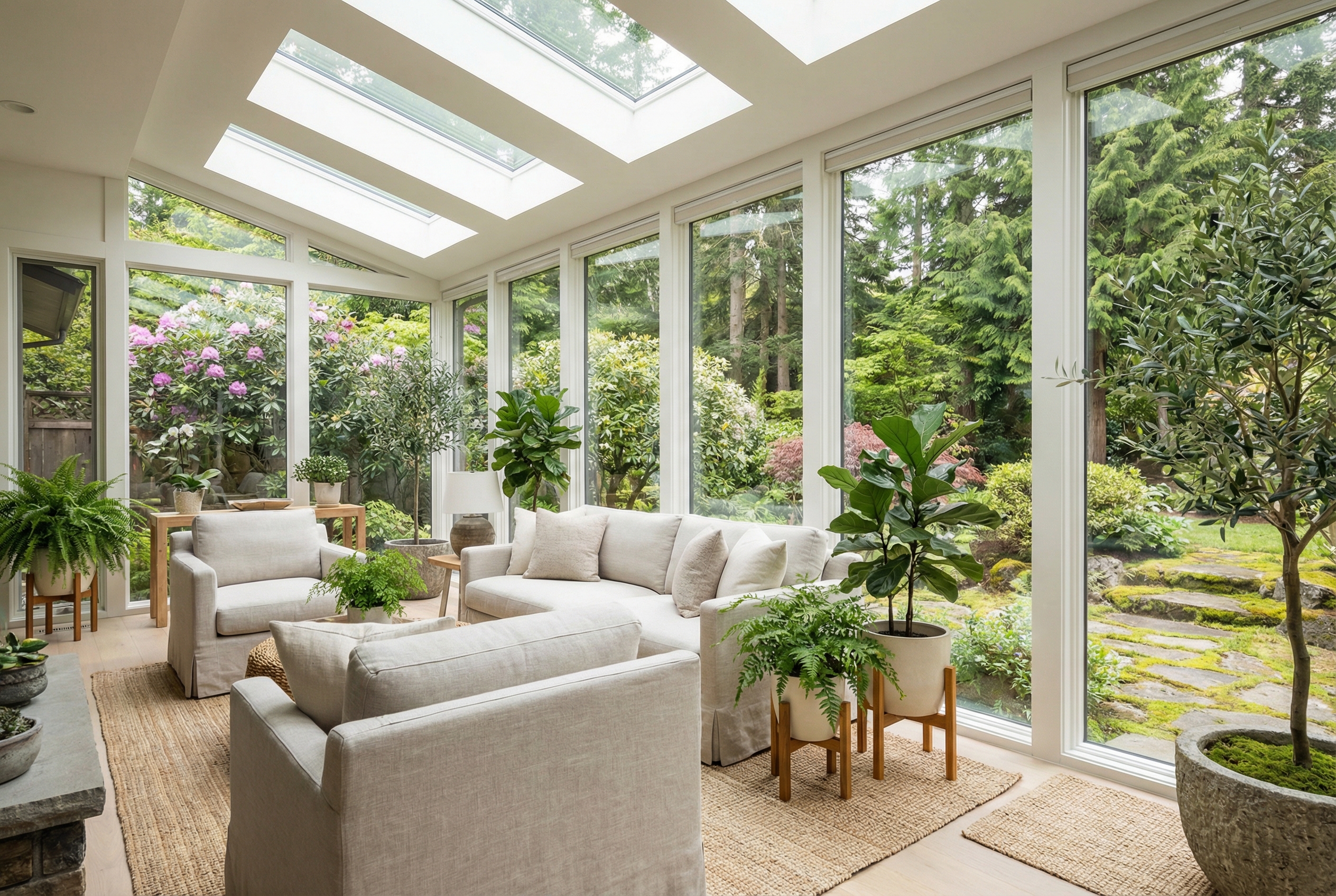
A sunroom is the ultimate answer to Portland’s weather challenge. You love your outdoor space, but eight months of rain and cool temperatures limit how much time you can actually spend out there. A sunroom or patio enclosure gives you the best of both worlds — panoramic views, abundant natural light, and connection to your yard, all within a fully enclosed, climate-controlled space that you can use 365 days a year.
Next Level Decks & Exteriors designs and builds both three-season and four-season sunrooms for Portland-area homeowners. Whether you want to enclose an existing patio or deck, or build a new sunroom addition from the ground up, we handle the full scope: design, engineering, permitting, construction, and finishing. Our sunrooms are built as permanent structures with proper foundations, insulation, and weatherproofing — not the flimsy, drafty screen enclosures of decades past.
Portland is one of the best cities in the country for a sunroom investment. Our mild winters mean a well-insulated sunroom stays comfortable with minimal heating, while our gray skies make the natural light a sunroom provides especially valuable during the darker months.
4
Season Use
365
Days of Comfort
15%
Home Value Increase
Three-Season vs. Four-Season Sunrooms
The choice between a three-season and four-season sunroom comes down to how you want to use the space and how much you are willing to invest in insulation and climate control.
Three-Season Sunrooms: Designed for use from approximately March through November in Portland. They feature single-pane or double-pane glass, minimal insulation in the roof and knee walls, and no permanent heating or cooling system. They stay comfortable during mild weather but are too cold for regular use during Portland’s December-February cold snaps (when temperatures drop into the 20s-30s). Three-season rooms are significantly less expensive than four-season because they do not require the same insulation, HVAC, or structural standards.
Four-Season Sunrooms: Fully insulated and climate-controlled, four-season sunrooms are usable every day of the year. They feature dual-pane or triple-pane Low-E glass, insulated walls and roof panels (R-16 to R-24), and a dedicated heating/cooling system (mini-split heat pump, electric baseboard, or extension of your home’s HVAC). They are built to the same energy code standards as any room addition. In Portland’s mild climate, a mini-split heat pump is the ideal heating/cooling choice — they are highly efficient in our moderate temperature range and provide both heating and air conditioning.
Portland Recommendation: For most Portland homeowners, we recommend a four-season sunroom. Our winters are mild enough that a properly insulated sunroom with a mini-split heat pump can be heated for pennies a day, and you get a comfortable room 12 months a year instead of 9. The cost difference between three-season and four-season is typically 25-40%, which most homeowners find worthwhile for the additional three months of use.
Glass Options & Energy Performance
Glass selection is the single most important decision in sunroom design because glass makes up 50-80% of the wall and sometimes roof surface area. The right glass keeps the room comfortable, energy-efficient, and quiet. The wrong glass creates an oven in summer and an icebox in winter.
Low-E (Low-Emissivity) Glass: Low-E coatings are invisible metallic layers applied to the glass surface that reflect infrared heat while transmitting visible light. In winter, Low-E glass keeps heat inside the room. In summer, it reflects solar heat away. We specify Low-E glass on all our sunroom projects — the energy savings pay for the upgrade within 3-5 years.
Double-Pane vs. Triple-Pane: Double-pane insulated glass units (IGUs) are the standard for Portland sunrooms, providing adequate insulation for our mild climate. Triple-pane glass offers superior insulation and noise reduction but adds significant cost. We recommend triple-pane for homeowners near busy streets (like those in inner SE Portland, NW Portland, or along transit corridors) where noise reduction is a priority.
Tinted and Reflective Glass: For south- and west-facing sunrooms that receive intense afternoon sun, tinted or reflective glass reduces solar heat gain and glare. Gray or bronze tinting reduces heat gain by 25-40% while maintaining clear views. These options are especially valuable during Portland’s sunny July-September months when south-facing glass can create significant heat buildup.
Roof Glass: Glass or polycarbonate roof panels flood the room with overhead light but require careful thermal management. We use insulated polycarbonate panels or Low-E roof glass with motorized interior shades to balance light and heat. Solid insulated roof panels with skylights are often a better choice for Portland — they provide excellent insulation with targeted natural light.
Insulation, Heating & Cooling
A four-season sunroom in Portland needs proper insulation and an efficient heating/cooling system to be comfortable year-round.
Wall Insulation: Knee walls (the solid lower portion below the windows) should be insulated to at least R-13 (fiberglass batt) or R-15 (rigid foam). We prefer rigid foam insulation because it does not absorb moisture — an important consideration in Portland’s damp climate. The roof/ceiling should be insulated to R-24 or better.
Floor Insulation: If the sunroom is built on a concrete slab, rigid foam insulation beneath the finished floor prevents cold from radiating up through the concrete. For sunrooms built over an existing deck or elevated structure, we insulate between the floor joists with rigid foam or closed-cell spray foam.
Heating and Cooling: A ductless mini-split heat pump is the ideal climate control solution for Portland sunrooms. Mini-splits are extraordinarily efficient in Portland’s temperature range (they deliver 3-4 times more heat energy than they consume in electricity at our typical winter temperatures of 35-45°F). A single 12,000 BTU mini-split head can heat and cool a sunroom up to 500 square feet. Installation is straightforward — just a small penetration through the wall for the refrigerant line, with no ductwork required.
Supplemental Heat: For especially cold nights (below 25°F, which occurs 10-15 times per year in Portland), an in-floor radiant heat system or electric baseboard provides supplemental warmth. Most homeowners find the mini-split alone is sufficient for 95% of Portland weather conditions.
Permits, Engineering & Building Code
A sunroom or patio enclosure is a building addition, and it requires a permit in Portland and all surrounding jurisdictions. Here is what is involved:
Building Permit: You will need a structural building permit from the City of Portland BDS (or your local jurisdiction). This requires engineered plans showing the foundation design, structural framing, glass specifications, insulation values, and connection to the existing house. We work with licensed structural engineers to prepare these plans.
Energy Code: Four-season sunrooms must meet Oregon’s energy code requirements, including minimum insulation values, maximum window-to-wall ratios, and HVAC efficiency standards. Three-season sunrooms have a code exemption for some energy requirements as long as they are separated from the conditioned house by a wall with a door that can close.
Setbacks: Your sunroom must comply with your property’s zoning setback requirements. In most Portland residential zones, the rear setback is 5 feet. Side setbacks vary from 3 to 10 feet depending on the zone. We verify your specific setbacks before beginning design.
Timeline: The permit review process in Portland currently takes 4-8 weeks for a standard residential addition. We submit the permit application early in the design process so that review is complete before we are ready to start construction.
Converting an Existing Patio or Deck
Many of our Portland sunroom projects involve enclosing an existing covered patio or deck rather than building from scratch. This approach offers cost savings because the foundation and/or roof structure are already in place.
Patio Enclosure: If you have an existing solid-roof patio cover on a concrete slab, adding glass walls converts it into a sunroom. We assess the existing roof structure to verify it meets the higher load requirements for an enclosed space (enclosed structures must resist wind uplift loads that open structures do not), reinforce if needed, and install window systems between the existing posts.
Deck Enclosure: Enclosing a deck is more complex because the deck structure was not designed for the additional weight and wind loads of walls and a roof. We evaluate the deck’s structural capacity, reinforce the framing as needed, add proper insulation below the deck floor, and install window systems on the deck railings. In some cases, it is more cost-effective to remove the deck and build a proper addition on a new foundation.
Cost Comparison: Enclosing an existing covered patio typically costs 30-50% less than building a new sunroom from scratch, because the foundation and roof are already in place. Expect $15,000-$35,000 for a patio enclosure conversion versus $30,000-$60,000+ for a new sunroom addition, depending on size, glass quality, and finish level.

Your outdoor space should be an extension of your home — not an afterthought.
Why Choose Next Level Decks & Exteriors
Full-Service Design-Build: From concept drawings through permit approval, construction, and finishing, we handle every aspect of your sunroom project. No need to coordinate separate designers, engineers, and contractors.
Portland Climate Optimization: Our sunroom designs are specifically optimized for Portland’s climate — the right glass coatings for our latitude, insulation levels matched to our temperature range, and heating systems chosen for our mild winters. A sunroom designed for Portland is fundamentally different from one designed for Minnesota or Arizona.
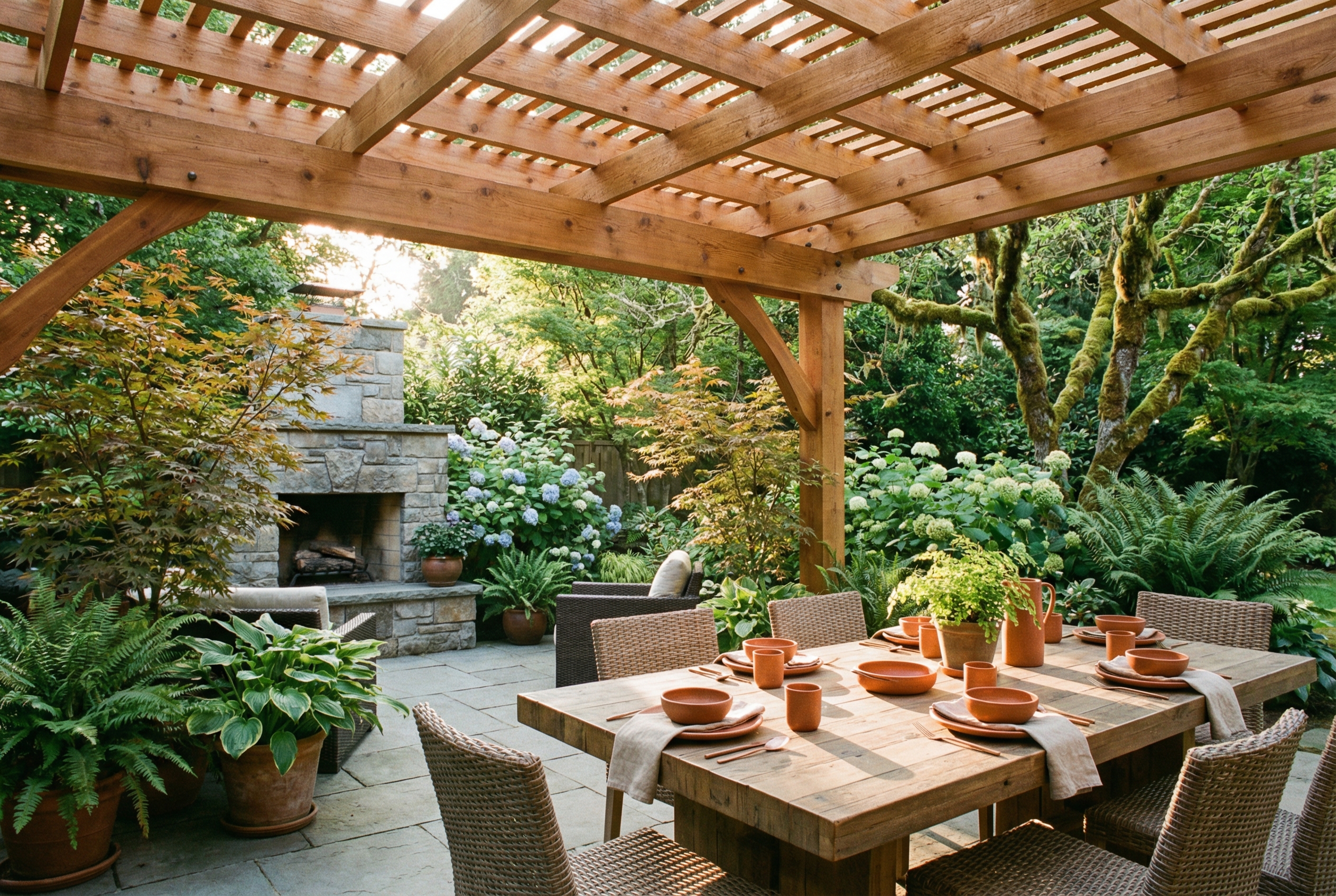
Energy-Efficient Construction: We build to or above Oregon energy code requirements, using Low-E glass, proper insulation, and efficient mini-split heat pumps to keep your sunroom comfortable at minimal operating cost.
Permit Expertise: We have navigated the Portland BDS permit process many times and know exactly what is required for approval. Our permit applications are thorough and complete, minimizing review time and revision cycles.
Frequently Asked Questions
Sunroom costs vary widely based on size, type, and finish level. Three-season sunrooms typically range from $15,000-$30,000. Four-season sunrooms with proper insulation and HVAC run $30,000-$60,000+. Enclosing an existing covered patio is generally 30-50% less expensive than building new. We provide detailed, itemized estimates during the design phase so there are no surprises.
Yes. According to national remodeling surveys, sunroom additions recoup approximately 50-75% of their cost at resale. In Portland, where indoor-outdoor living is highly valued and rainy weather makes enclosed outdoor spaces especially desirable, the return can be even higher. A well-designed sunroom also makes your home more attractive to buyers, potentially reducing days on market.
A four-season sunroom with proper insulation and a mini-split heat pump is comfortable 365 days a year in Portland. Our winters are mild enough (average lows in the mid-30s) that a well-insulated sunroom can be heated efficiently and affordably. Even a three-season room is usable 9-10 months in Portland’s moderate climate — only the coldest December-February nights make it uncomfortable without heat.
From permit approval to completion, most sunroom projects take 4-8 weeks of active construction. The permit review process adds 4-8 weeks before construction begins. Total timeline from initial design to finished sunroom is typically 3-5 months. We establish a detailed construction schedule at the start of every project and keep you updated on progress throughout.
A ductless mini-split heat pump is the ideal choice for Portland sunrooms. Mini-splits are exceptionally efficient in our moderate temperature range, providing both heating and cooling from a single unit. A 12,000 BTU head unit handles up to 500 square feet and costs very little to operate — typically $20-$40 per month during the heating season. No ductwork is required, making installation simple and non-invasive.
Ready to Get Started?
Schedule a free on-site consultation. We’ll assess your property, discuss your vision, and provide a detailed estimate — no pressure, no obligation.