
Siding Repair Services in Portland
Expert siding repair for every material — fixing damage before it reaches the structural framing behind your walls.
Common Siding Damage Types in Portland
Damaged siding is more than a cosmetic problem in Portland. Every crack, hole, missing panel, and failed caulk joint is a pathway for water to reach the structural framing, sheathing, and insulation inside your walls. In a city that receives 43 inches of rain annually, even small siding damage can escalate quickly into major moisture problems — rot, mold, and structural deterioration that costs far more to repair than fixing the siding would have.
Next Level Decks & Exteriors provides prompt siding repair services for all siding types across the Portland metro area: fiber cement (Hardie), cedar, vinyl, engineered wood (LP SmartSide), and composite. We match existing materials and finishes so repairs blend seamlessly with the surrounding siding.

24hr
Emergency Patches
100%
Material Match Rate
5+
Siding Types Repaired
Common Siding Damage Types in Portland
Impact Damage: Falling branches, hail, lawn equipment, and wind-blown debris crack, dent, and puncture siding. Fiber cement and vinyl are most susceptible to impact damage — Hardie can crack from a hard strike, and vinyl can dent or shatter in cold weather. Impact damage requires prompt repair because the breach allows direct water intrusion into the wall cavity.
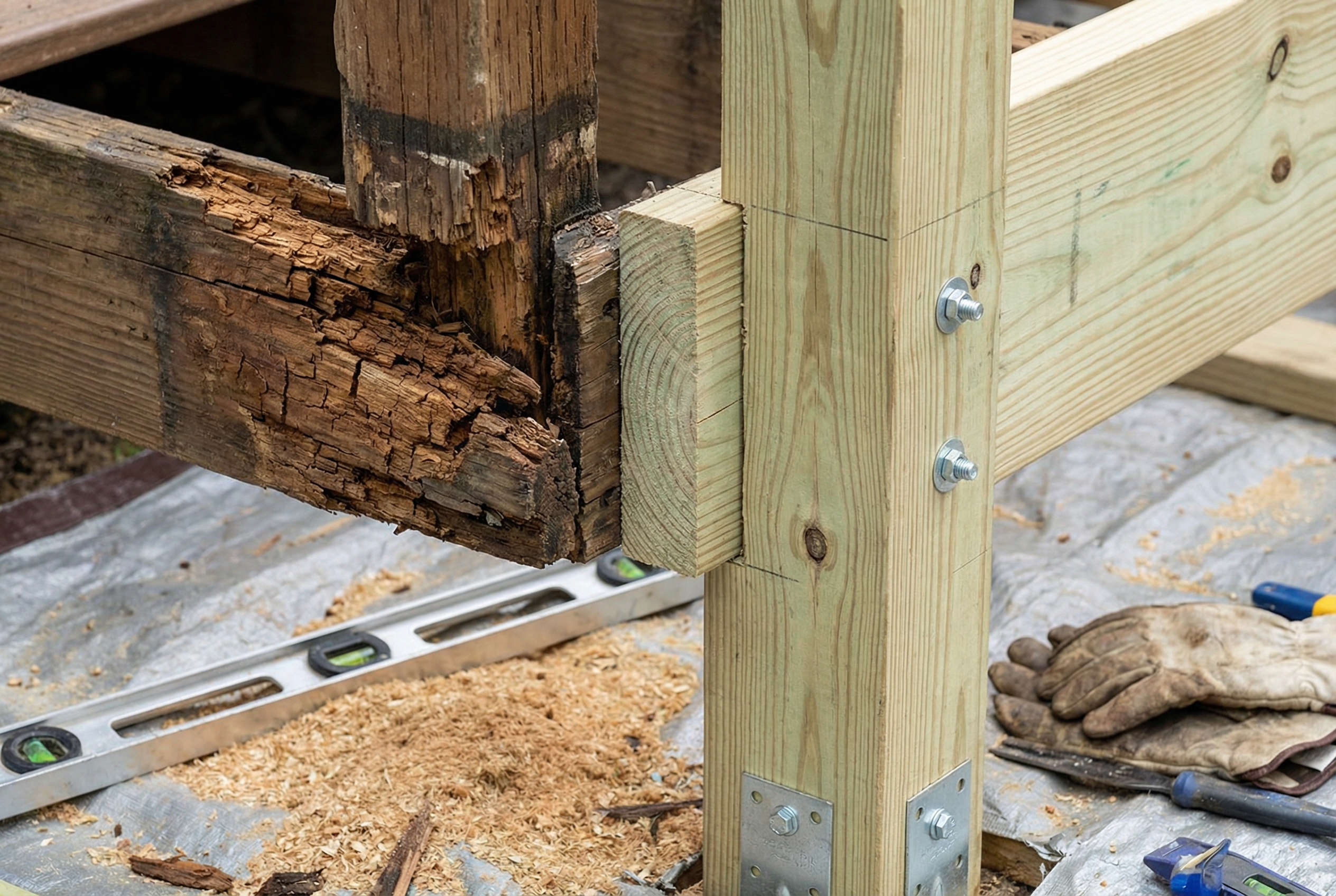
Moisture Damage and Rot: Wood and engineered wood siding absorb moisture and can develop rot, especially at cut edges, nail holes, and horizontal surfaces where water pools. Bottom courses near ground level, areas beneath leaking gutters, and wall sections without adequate flashing are the most common rot locations on Portland homes. We probe suspect areas with a moisture meter to determine the extent of hidden damage.
Paint and Finish Failure: Peeling, blistering, and chalking paint exposes the siding substrate to direct weather exposure. On wood siding, this leads to moisture absorption and surface decay. On Hardie, exposed substrate can wick moisture at the edges. Finish failure in Portland is often caused by inadequate surface prep before painting, moisture behind the siding pushing outward, or low-quality paint that cannot withstand our UV and moisture cycles.
Storm Damage: Portland’s windstorms can rip vinyl panels from the wall, crack Hardie boards, and blow off trim pieces. Falling trees and large branches cause catastrophic damage to entire wall sections. Storm damage is typically covered by homeowner’s insurance, and we provide the documentation needed for claims.
Woodpecker Damage: Portland’s Northern Flickers and other woodpeckers drill holes in wood, cedar, and even Hardie siding. The damage is both functional (water entry) and ongoing (the birds return to the same locations). We repair the holes and can recommend deterrent strategies to prevent recurrence.
When to Repair vs. When to Replace Your Siding
Not all siding damage warrants a full re-siding project. Here is how we evaluate the repair-vs-replace decision:
Repair When: Damage is localized to specific boards, panels, or sections. The surrounding siding is in good condition. Matching materials are available. The underlying sheathing and framing are sound. Typical repair scenarios include a few cracked Hardie boards from impact, a rotted bottom course of cedar, storm damage to one wall, or a section of damaged vinyl panels.
Replace When: Damage is widespread across multiple walls. The siding material has reached end-of-life (20+ year-old vinyl that is brittle and faded, or cedar with extensive rot). Multiple previous repairs have created a patchwork appearance. The underlying sheathing shows widespread moisture damage. Or when you want to change materials — for example, replacing aging cedar with maintenance-free Hardie.
The Inspection Factor: One of the most valuable aspects of siding repair is the opportunity to inspect the wall cavity behind the damaged area. We check for hidden rot, mold, moisture damage to sheathing, and failed housewrap. If we find problems behind the repair area, we discuss the extent with you before proceeding — sometimes a repair project reveals that a larger section needs attention.
Insurance Claims for Siding Damage
Many siding repairs in Portland result from covered events — windstorms, falling trees, hail, and other sudden damage. Here is how we help with insurance claims:
Documentation: We photograph all damage from multiple angles, document the cause, measure the affected area, and prepare a detailed line-item repair estimate that meets insurance company standards. This documentation is provided to you for submission with your claim.
Adjuster Coordination: If your insurance adjuster needs to inspect the damage before repairs, we schedule around their visit. We can also meet the adjuster on-site to walk through the damage and explain the repair scope.
Matching Requirement: Insurance policies typically require repairing with matching materials. If your siding has been discontinued or cannot be color-matched, the policy may cover replacement of the entire affected wall or section to maintain a consistent appearance. We help you navigate this with your insurer.
Deductible Consideration: For small repairs that cost less than your deductible, filing a claim is not worthwhile. We will tell you upfront if the repair cost is likely below your deductible threshold so you can make an informed decision about whether to file.
Your outdoor space should be an extension of your home — not an afterthought.
Why Choose Next Level Decks & Exteriors
All-Material Expertise: We repair fiber cement, cedar, vinyl, engineered wood, and composite siding. Whatever material is on your home, we have the experience and tools to fix it correctly.
Material Matching: We source matching siding profiles, textures, and colors so repairs are virtually invisible. When exact matches are not available, we discuss options including painting the repaired section to blend.
Moisture Investigation: Every siding repair includes an inspection of the wall cavity behind the damaged area. We check for hidden rot, mold, and moisture damage that would otherwise continue worsening behind the new siding.
Frequently Asked Questions
In most cases, yes. Current-production Hardie, vinyl, and LP SmartSide profiles can be matched exactly. Cedar boards are readily available from Portland-area lumber suppliers. For discontinued products, we source the closest match available and can paint the repaired area to blend with the surrounding siding. We always bring a sample or photo of your existing siding to the supplier to confirm the match before ordering.
Emergency repairs (large holes, active water entry) can usually be addressed within 1-3 days. Standard repairs are scheduled within 1-2 weeks. The timeline depends on material availability — standard profiles are in stock, while specialty or discontinued products may require ordering with a 1-3 week lead time. We can install a temporary waterproof patch immediately for urgent situations while waiting for matching materials.
Most homeowner’s insurance policies cover siding damage from sudden events: windstorms, falling trees, hail, vehicle impacts, and vandalism. Gradual deterioration (rot, aging, normal wear, deferred maintenance) is typically not covered. We provide detailed documentation for insurance claims and coordinate with your adjuster as needed. If the repair cost is below your deductible, we will advise you accordingly.
Ready to Get Started?
Schedule a free on-site consultation. We’ll assess your property, discuss your vision, and provide a detailed estimate — no pressure, no obligation.