
Deck & Patio Privacy Screens
Custom-built privacy screens that shield your outdoor space from neighbors, wind, and street noise without sacrificing style.
Horizontal Slat Privacy Screens
Portland’s neighborhoods are getting denser. Infill development, ADUs, and lot-line construction mean your once-private backyard deck may now have a neighbor’s window, a second-story ADU, or a busy sidewalk looking right in. Privacy screens give you back the sense of seclusion that makes outdoor living relaxing — blocking sightlines, reducing wind, and even dampening street noise.
Next Level Decks & Exteriors designs and builds custom privacy screens for decks, patios, and outdoor living spaces throughout the Portland metro area. We offer horizontal slat screens, lattice panels, solid composite walls, living plant screens, and combination designs that provide the privacy you need while maintaining airflow, light, and the aesthetic of your outdoor space.
Every screen we build is engineered for wind loads (Portland’s East Gorge winds can be significant), structurally attached to your deck or patio, and designed to comply with local zoning and HOA requirements. Privacy does not have to mean an ugly wall — our screens are architectural features that add value and beauty to your outdoor space.
100%
Privacy Rating
10+
Screen Styles
0
Maintenance (Composite)
Horizontal Slat Privacy Screens
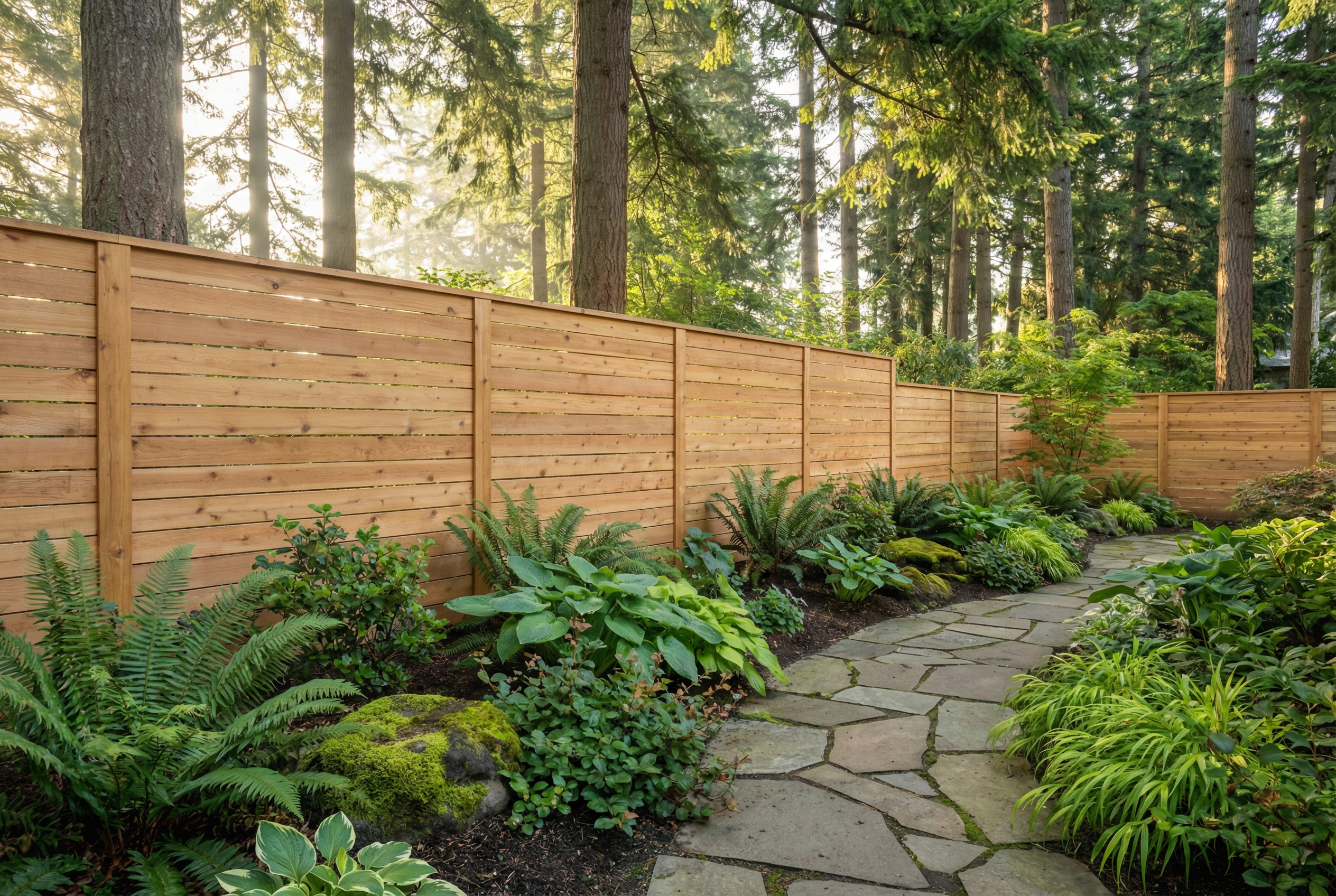
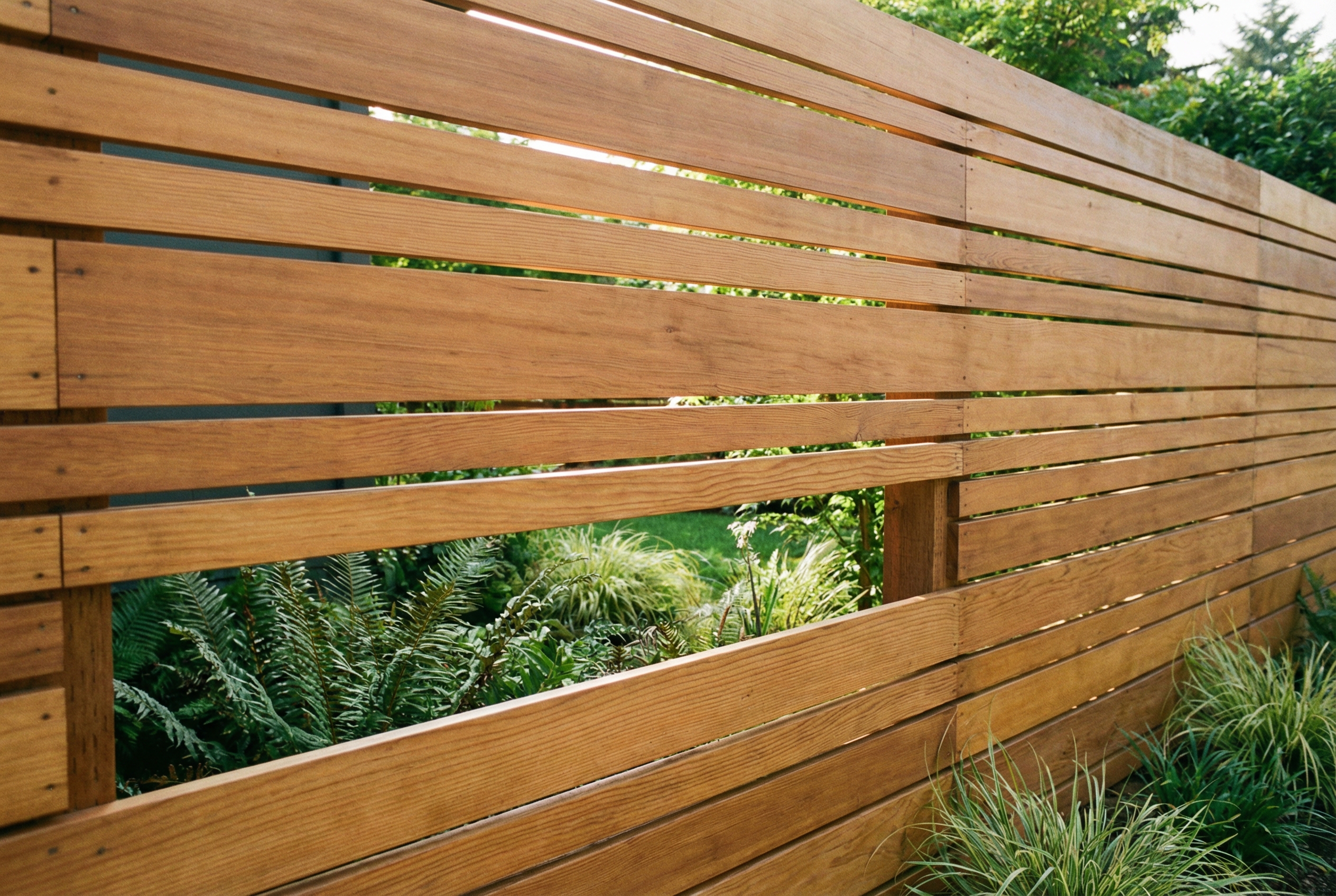
Horizontal slat screens are the most popular privacy screen style in Portland, and it is easy to see why. Clean horizontal lines create a modern, contemporary aesthetic that complements Portland’s mid-century and modern architectural styles while providing effective visual screening.
How They Work: Horizontal boards (typically 1×4 or 1×6 cedar, composite, or aluminum) are fastened to vertical posts at consistent spacing. The gap between slats determines the balance between privacy and airflow. Tight spacing (1/4-inch gaps) provides near-total privacy. Wider spacing (1-inch gaps) blocks most sightlines while allowing significant air circulation and light penetration.
Materials: Cedar is the traditional choice — warm, natural, and available at every Portland lumber yard. Composite boards (Trex, TimberTech, Fiberon) provide the same look without any maintenance. Aluminum slats (powder-coated) offer the slimmest profile and longest life. We can also combine materials — aluminum posts with cedar slats, or composite slats in a cedar frame — for a custom look.
Height and Zoning: Portland’s zoning code limits fence and screen heights. In most residential zones, structures up to 6 feet tall are allowed by right, while taller screens (up to 8 feet in some cases) may require a permit or variance. Screens attached to a deck railing count from the deck surface, not from grade, which can affect the allowable height. We research your specific property’s zoning before designing your screen.
Lattice & Decorative Panel Screens
Lattice screens provide partial privacy with an open, airy feeling that works well in smaller spaces or areas where you want screening without creating a closed-in box. They are also the ideal support structure for climbing plants, which can fill in over time to create a natural living screen.
Traditional Lattice: Diamond-pattern lattice panels (the classic criss-cross pattern) provide approximately 50% screening. They are available in cedar, pressure-treated wood, vinyl, and composite. We use heavy-duty architectural-grade lattice, not the flimsy stapled strips sold at hardware stores — our lattice panels are made from solid 3/4-inch stock that will not sag, bow, or blow apart in Portland wind.
Square Lattice: A more contemporary variation with horizontal and vertical strips forming a grid pattern. Square lattice has a cleaner look that pairs well with modern architecture and provides a sturdy framework for plant training.
Decorative Metal Panels: Laser-cut aluminum or steel panels with geometric, botanical, or abstract patterns provide a striking architectural element that doubles as a privacy screen. These panels cast beautiful shadow patterns when backlit by the sun and add a high-end, custom feel to any outdoor space. They are maintenance-free and available in any powder-coat color.
Composite & Solid Panel Screens
When you need complete visual privacy — blocking 100% of sightlines — solid panel screens are the solution. These create an opaque wall on one or more sides of your deck or patio using composite boards, tongue-and-groove cedar, or PVC panels.
Composite Boards: Full composite privacy walls use deck boards installed vertically or horizontally on a post-and-rail framework. The boards interlock or are fastened tight together with no gaps, providing total privacy. Composite never needs staining, sealing, or painting, making it ideal for Portland’s wet climate where wood walls would need constant maintenance.
Tongue-and-Groove Cedar: T&G cedar boards create a solid, naturally beautiful wall with no visible fasteners. The tongue-and-groove joinery holds the boards tight together while allowing the wood to expand and contract with moisture changes — critical in Portland’s cycling humidity. Finished with a penetrating stain, T&G cedar screens last 15-20 years.
Wind Considerations: Solid screens act as wind barriers, which means they need to handle the full wind load on their surface area. We engineer solid screen posts and footings for Portland’s wind exposure, using deeper post holes and stronger brackets than you would need for a slatted screen. On exposed sites, we may recommend including ventilation gaps near the top of the screen to reduce wind pressure.
Living Screens & Plant Walls
Living screens use plants — trained on a trellis framework or grown as a dense hedge — to provide natural, beautiful privacy screening. In Portland’s mild, wet climate, evergreen plants grow vigorously and can create a full living screen within 2-3 seasons.
Trellis with Climbing Plants: We build cedar or metal trellis frameworks and plant climbing species at the base. The best choices for Portland include evergreen clematis (Clematis armandii) for year-round screening, star jasmine (Trachelospermum) for fragrant foliage, and climbing hydrangea for shade-side screens. Deciduous options like wisteria and grapevine provide dense summer coverage but lose leaves in winter.
Planter Box Screens: For decks where in-ground planting is not possible, we build planter box systems — large raised planters integrated into the deck railing or screen framework, filled with evergreen screening plants like arborvitae, bamboo, or ornamental grasses. These provide instant greenery that grows into full screening over time.
Combination Approach: The most effective living screens in Portland combine a structural element (horizontal slats or lattice) with climbing plants. The structure provides immediate partial privacy while the plants grow in and eventually create a lush, green wall. This approach provides year-round screening from day one and improves every season as the plants mature.
HOA Considerations & Portland Zoning
Before building any privacy screen, you need to understand both Portland zoning regulations and any HOA rules that apply to your property. Here is what to know:
Portland Zoning: In residential zones, freestanding screens and fences up to 6 feet tall are generally allowed without a permit. Screens taller than 6 feet may require a zoning adjustment. Screens in corner lots or near intersections must comply with vision clearance area requirements. If your screen is attached to the house structure (like a screen wall on a covered patio), it may be classified as a building addition and require a building permit.
HOA Rules: Many Portland-area HOAs (especially in Beaverton, Lake Oswego, Tigard, and newer developments) have specific guidelines regarding screen and fence materials, colors, heights, and styles. Some HOAs require pre-approval of exterior modifications including privacy screens. We review your HOA’s CC&Rs as part of our design process and ensure our proposal complies with all applicable restrictions.
Neighbor Relations: Oregon law gives you the right to build screens and fences on your property line up to the allowed height. However, we always recommend discussing your plans with neighbors before construction. In many cases, a privacy screen benefits both parties, and open communication prevents conflicts. If the screen will affect a shared view or cast shadow on the neighbor’s garden, addressing those concerns proactively goes a long way.
Your outdoor space should be an extension of your home — not an afterthought.
Why Choose Next Level Decks & Exteriors
Custom Design: Every privacy screen we build is custom-designed for your specific situation — your deck layout, the sightlines you need to block, and the architectural style of your home. We do not install generic panels; we create integrated, purposeful screens.
Wind-Rated Engineering: Portland’s windstorms can be significant, especially in elevated and east-facing locations. We engineer every screen for wind loads, using properly sized posts, adequate footings, and hardware rated for the exposure. Our screens do not blow over in December storms.
Zoning & HOA Compliance: We research your property’s zoning and HOA requirements before designing your screen, ensuring the finished product complies with all applicable rules. No surprises, no violations, no take-down orders.
Multi-Material Expertise: From natural cedar to zero-maintenance composite to living plant screens, we work in every material and help you choose the right option for your aesthetic, maintenance preferences, and budget.
Frequently Asked Questions
Portland zoning generally allows freestanding screens and fences up to 6 feet tall without a permit in residential zones. Screens attached to a deck are measured from the deck surface. Taller screens may be possible with a zoning adjustment or variance. If your screen is in a corner lot vision clearance area, height limits may be lower. We research your specific property’s regulations during the design phase.
Composite and aluminum screens require zero maintenance — no painting, staining, sealing, or treating. They will not rot, warp, or fade in Portland’s wet climate. Composite offers warm wood-tone colors while aluminum provides the sleekest modern profile. Both materials come with 20+ year warranties and will look as good in decade two as they did on installation day.
Absolutely. We retrofit privacy screens onto existing decks regularly. Screen posts are either bolted to the existing deck structure (rim joist or beam) or anchored to independent footings adjacent to the deck. We evaluate your deck’s structural capacity during the consultation and recommend the best attachment method. Most screen additions take 2-4 days to install.
It depends on the design. Solid screens block nearly all wind, creating a sheltered zone on the lee side. Horizontal slat screens with narrow gaps block 60-80% of wind while still allowing some air circulation — this is usually the ideal balance for Portland decks. Lattice and open-pattern screens block approximately 30-50% of wind. If wind protection is a priority, we can design screens with a solid lower section for maximum blocking and a slatted upper section for airflow.
It does not have to. Design choices make the difference. Horizontal slat screens with gaps create visual depth and allow light through, maintaining an open feeling. Light-colored materials reflect light and feel less enclosing than dark finishes. Incorporating clear glass or open sections at strategic points preserves sightlines where privacy is not needed. We design every screen to provide privacy without sacrificing the sense of spaciousness on your deck.
Ready to Get Started?
Schedule a free on-site consultation. We’ll assess your property, discuss your vision, and provide a detailed estimate — no pressure, no obligation.