
Dry Rot Repair in Portland
Portland’s wet climate makes dry rot inevitable — but catching it early and fixing it right prevents small problems from becoming structural emergencies.
Prevention: Stopping Rot Before It Starts
Dry rot is a misleading name — the fungus that causes it (Serpula lacrymans and related species) actually requires moisture to grow. “Dry rot” describes the result: wood that has been consumed by fungi and become dry, crumbly, and structurally worthless. In Portland, where persistent rainfall and damp conditions create ideal fungal growing conditions, dry rot is one of the most common and most destructive problems homeowners face.
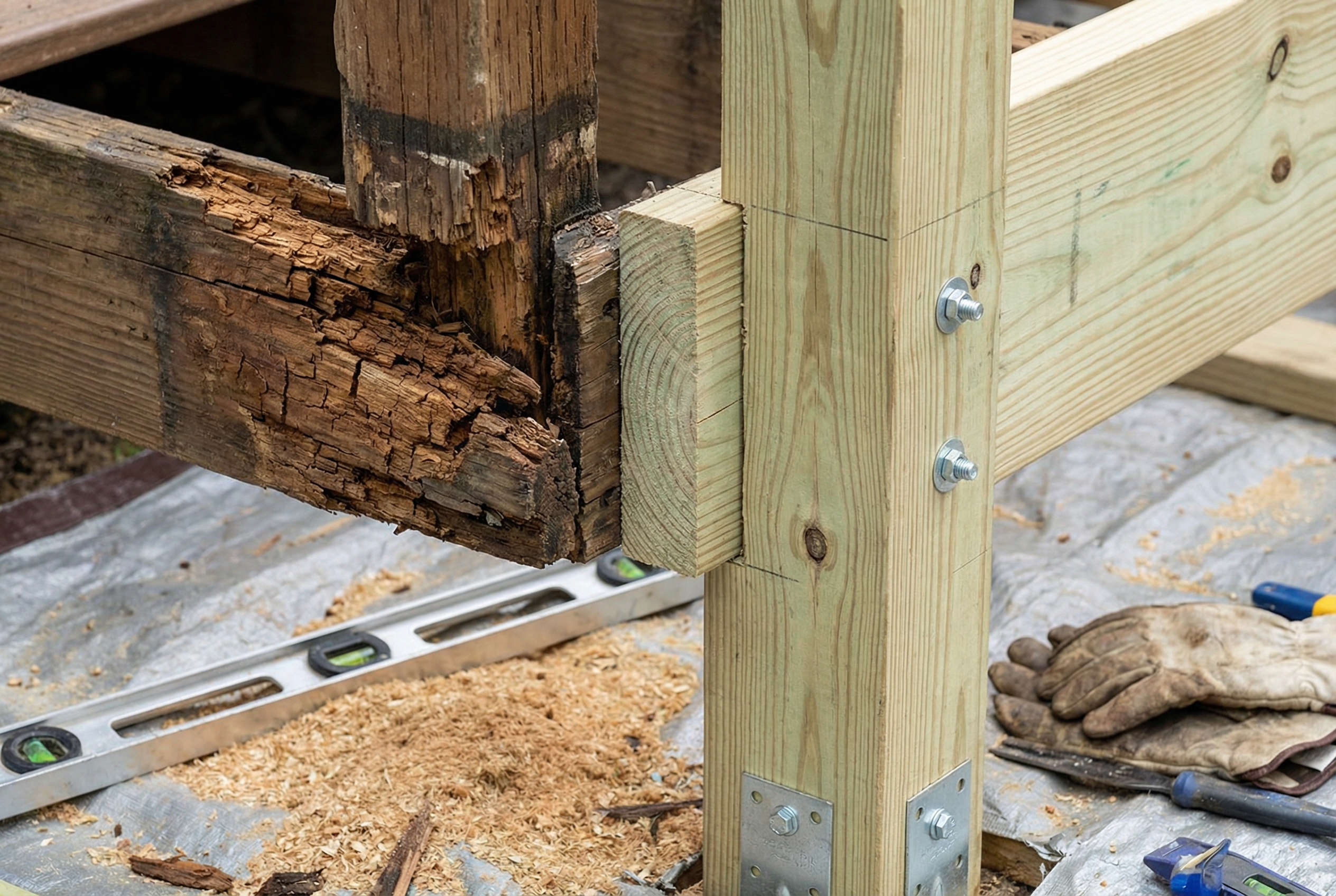
Next Level Decks & Exteriors diagnoses and repairs dry rot across every exterior component of Portland homes — siding, trim, window frames, door frames, fascia, soffits, deck framing, and structural wall members. We do not just patch the visible damage; we trace the moisture source that caused the rot, fix the underlying problem, and rebuild the affected area with materials and methods that prevent recurrence.
48hr
Inspection Turnaround
100%
Root Cause Fix
10yr
Prevention Methods
Prevention: Stopping Rot Before It Starts
The best dry rot repair is prevention. In Portland’s climate, proactive moisture management dramatically reduces rot risk:
Gutter Maintenance: Clogged gutters overflow and direct water against siding, fascia, and trim — the most common cause of localized rot on Portland homes. Clean gutters twice annually (October and March) and repair any leaking joints or missing downspout extensions.
Flashing Inspection: Check flashing at all roof-wall junctions, window heads, door heads, and deck ledger boards annually. Failed or missing flashing is the second most common cause of hidden rot. Self-adhering membrane and metal Z-flashing should be visible at every horizontal transition.
Ground Clearance: Maintain a minimum 6-inch gap between siding, trim, and grade. Soil, mulch, and landscaping against wood components trap moisture and invite rot. This is one of the most frequently violated principles we see on Portland homes — raised beds and bark mulch piled against siding cause predictable rot within 3-5 years.
Paint and Caulk Maintenance: Maintain your exterior finish. Peeling paint, failed caulk, and exposed wood allow direct moisture absorption. Annual inspection and touch-up of these items costs almost nothing compared to the rot repair they prevent.
Ventilation: Ensure adequate attic, soffit, and crawl space ventilation. Trapped moisture vapor condensing inside enclosed spaces causes rot from the inside out. Portland’s mild, damp winters are particularly problematic for condensation — warm, moist indoor air meets cold exterior surfaces and deposits liquid water.
Common Dry Rot Locations on Portland Homes
Dry rot does not occur randomly — it follows predictable moisture patterns. These are the locations we check first on every Portland home inspection:
Window Sills and Frames: The single most common rot location. Water collects on horizontal window sills and wicks into the end grain of wood window frames. Failed glazing putty, missing drip edges, and inadequate head flashing accelerate the problem. We frequently find rot that started at a window sill and migrated down the wall into the framing below.
Door Frames and Thresholds: Exterior door frames, especially at the bottom where they meet the threshold, are constantly exposed to rain splash and foot traffic. French doors and sliding glass doors are particularly vulnerable because their wide frames collect more water.
Fascia and Soffit: Fascia boards (the vertical boards at the roof edge) and soffits (the horizontal boards under the eave) are exposed to rain, gutter overflow, and ice dam moisture. Fascia behind leaking gutters is almost guaranteed to develop rot within 5-10 years.
Bottom Course of Siding: The lowest row of siding, especially where it is close to grade, is vulnerable to splash-back, soil moisture, and poor drainage. Portland’s clay-heavy soil holds water against foundations and lower siding.
Deck Ledger Boards: Where the deck attaches to the house, the ledger board is a notorious rot location. If the original installation did not include proper flashing (and many did not), water gets trapped between the ledger and the house rim joist, rotting both from the inside out.

Structural vs. Cosmetic Rot: Knowing the Difference
Not all rot is equally serious. The distinction between cosmetic and structural rot determines the urgency and scope of repair:
Cosmetic Rot (Surface Decay): Rot limited to the outer 1/4 inch of trim, siding, or fascia boards. The wood is soft on the surface but firm underneath. This is early-stage rot that can sometimes be treated with a wood consolidant (like Minwax Wood Hardener or Abatron LiquidWood) that penetrates the decayed fibers and re-solidifies them. Cosmetic rot on non-structural components is not an emergency but should be addressed promptly to prevent progression.
Structural Rot (Deep Decay): Rot that has penetrated into structural members — wall studs, rim joists, header beams, sill plates, deck joists, or any load-bearing component. Structural rot compromises the building’s safety and must be repaired promptly by removing the damaged material and replacing with sound lumber. A screwdriver test reveals structural rot: if you can push a screwdriver more than 1/2 inch into the wood with moderate pressure, the decay has compromised structural integrity.
Hidden Rot: The most dangerous type. Rot that is concealed behind siding, beneath decks, inside wall cavities, or under roofing. By the time visible signs appear on the surface (paint bubbling, soft spots, dark staining), the hidden damage is often extensive. This is why we always investigate beyond the visible damage during any rot repair — the tip of the iceberg principle applies perfectly to dry rot in Portland.
Your outdoor space should be an extension of your home — not an afterthought.
Why Choose Next Level Decks & Exteriors
Root Cause Diagnosis: We do not just patch rot — we find and fix the moisture source that caused it. Whether it is a flashing failure, a gutter leak, or a grading problem, we eliminate the cause to prevent recurrence.
Full Structural Capability: We repair both cosmetic and structural rot, including wall framing, rim joists, sill plates, and load-bearing members. Our crews have the carpentry skills and structural knowledge to safely remove and replace compromised framing.
Moisture Metering: We use professional moisture meters to map the extent of hidden moisture penetration beyond the visible rot. This ensures we remove all affected material, not just the obviously damaged pieces.
Frequently Asked Questions
Look for these signs: paint bubbling or peeling in localized areas, wood that feels soft or spongy when pressed, dark staining or discoloration on wood surfaces, crumbly wood that breaks apart in your hand, and a musty smell near exterior walls. You can test suspect areas by pushing a flathead screwdriver into the wood — if it sinks in more than 1/4 inch with moderate pressure, rot is present. We offer free exterior rot inspections for Portland homeowners.
Generally, no. Homeowner’s insurance covers sudden, accidental damage but excludes gradual deterioration, which includes dry rot from long-term moisture exposure. However, if the rot was caused by a sudden covered event (like a storm that damaged your roof and let water into the walls), the resulting rot may be covered. We help you document the cause of damage for insurance evaluation.
Yes. The fungal organisms that cause dry rot produce spores that can spread to adjacent wood members if moisture conditions are favorable. Rot in a window frame can spread down to the wall framing below. Rot in a deck ledger can migrate to the house rim joist. This is why prompt repair is important — the longer rot goes unaddressed, the larger and more expensive the repair becomes. We always check adjacent areas during any rot repair to ensure the damage has not spread beyond the visible area.
Ready to Get Started?
Schedule a free on-site consultation. We’ll assess your property, discuss your vision, and provide a detailed estimate — no pressure, no obligation.