
Fence Building & Installation
Custom-built fences that define your property, protect your family, and enhance your home’s curb appeal — built right for Portland’s climate.
Fence Material Comparison
A well-built fence is one of the most practical improvements you can make to your Portland home. It defines your property boundaries, provides privacy and security, contains pets and children, blocks wind, and adds significant curb appeal. But in Portland’s wet climate, a poorly built fence will lean, rot, and fall apart within a few years. The difference between a fence that lasts 5 years and one that lasts 25 comes down to materials, post installation methods, and construction quality.
Next Level Decks & Exteriors builds fences across the Portland metro area in every major material — cedar, pressure-treated wood, vinyl, composite, chain link, and ornamental metal. We handle the complete project from property line verification and underground utility marking through design, permitting (when required), construction, and staining or finishing.
Every fence we build starts with properly set posts — because the posts are the foundation, and when posts fail, the entire fence fails. We set posts in concrete to a minimum depth of 24 inches (deeper for taller fences and gate posts), using gravel drainage at the bottom of each hole to prevent water from pooling around the post base.
6ft
Standard Height
Lifetime
Cedar Lifespan
100%
Property Line Accuracy
Fence Material Comparison
Choosing the right fence material depends on your priorities: appearance, privacy level, maintenance tolerance, budget, and expected lifespan. Here is an honest comparison of every major fencing material we install in Portland:
Western Red Cedar: The gold standard for wood fencing in the Pacific Northwest. Natural rot resistance, beautiful warm tones, accepts stain beautifully, and ages to a handsome silver-gray if left natural. Expect a 20-30 year lifespan with periodic staining and 15-20 years without. Cost: $25-$45 per linear foot installed for a 6-foot privacy fence.
Pressure-Treated Pine: The budget-friendly wood option. Chemically treated to resist rot and insects. Costs 30-40% less than cedar but does not have the same natural beauty. Requires staining or sealing after an initial 30-60 day drying period. Expect a 15-20 year lifespan with maintenance. Cost: $18-$30 per linear foot installed.
Vinyl (PVC): Maintenance-free — never needs painting, staining, or sealing. Will not rot, warp, or attract insects. Available in white, tan, gray, and wood-grain textures. Higher upfront cost but lower lifetime cost due to zero maintenance. Expect a 25-30+ year lifespan. Cost: $30-$55 per linear foot installed.
Composite: Made from recycled wood fiber and plastic, composite fencing combines the look of wood with the low maintenance of vinyl. It resists moisture, insects, and UV fading. Available in natural wood colors. Expect a 25+ year lifespan. Cost: $35-$60 per linear foot installed.
Chain Link: The most affordable fencing option. Galvanized or vinyl-coated steel mesh provides security and pet containment without blocking light or air. Not a privacy solution unless fitted with privacy slats or fabric. Expect a 20-30 year lifespan for galvanized, longer for vinyl-coated. Cost: $12-$25 per linear foot installed.
Ornamental Metal (Aluminum/Steel): Elegant, open fencing for front yards, gardens, and pool enclosures. Powder-coated aluminum or wrought-iron-style steel. Does not provide privacy but offers security and classic curb appeal. Cost: $30-$70 per linear foot installed.
Cedar & Horizontal Fence Options
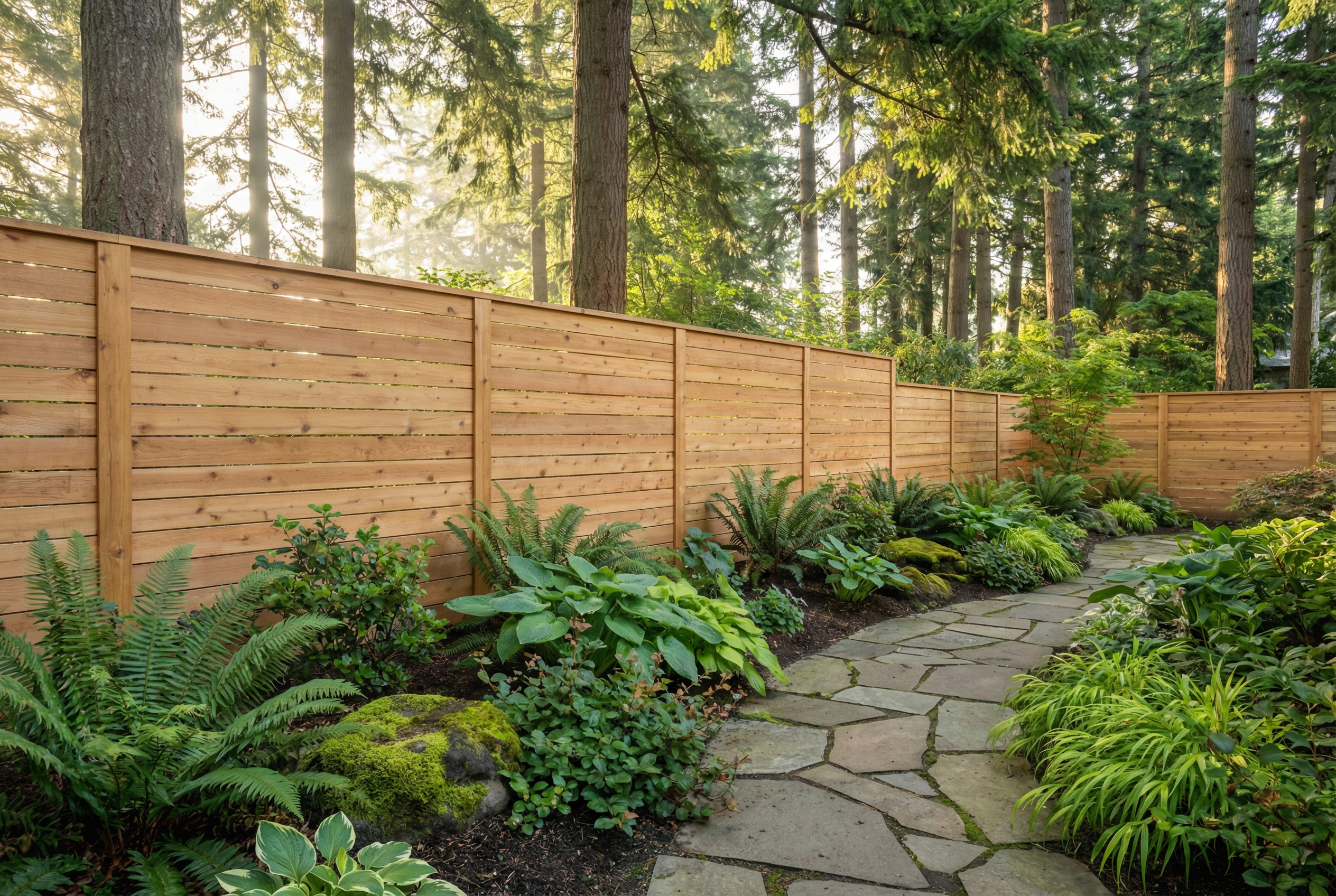
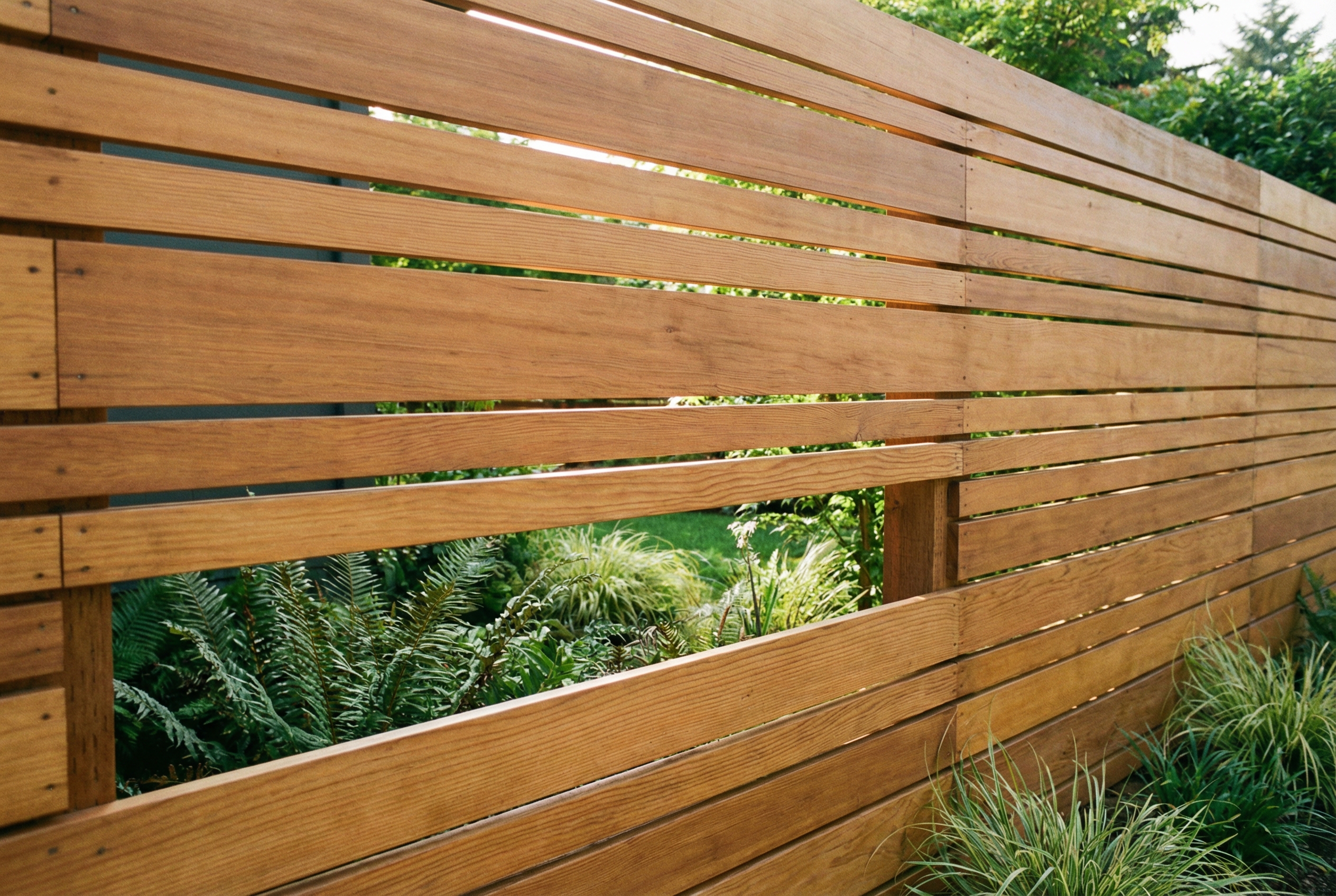
Horizontal fence designs have surged in popularity across Portland neighborhoods, offering a clean, modern look that complements contemporary and mid-century architecture. We build horizontal fences using tight-knot Western red cedar boards, installed with precise spacing and stainless steel fasteners to prevent warping and ensure decades of performance.
Fence Styles for Every Portland Home
The style of your fence should complement your home’s architecture and serve your functional needs. Here are the most popular fence styles we build in Portland:
Full Privacy (Board-on-Board): Overlapping boards on alternating sides of the rails create a fence with no gaps visible from either side. This is Portland’s most popular residential fence style because it provides complete privacy while looking good from both your yard and your neighbor’s. The overlapping design also accommodates wood movement without developing gaps.
Dog-Ear Privacy: The classic privacy fence with the top corners of each board cut at 45-degree angles. Clean, simple, and cost-effective. Each board is butted tightly against the next on one side of the rails.
Horizontal (Modern): Horizontal boards fastened between vertical posts create a contemporary look that has become extremely popular in Portland’s inner neighborhoods — Sellwood, Alberta, Mississippi, Hawthorne, and Division. Horizontal fences pair well with modern, mid-century, and minimalist architecture.
Picket: Traditional front-yard fencing with evenly spaced vertical boards (typically 3-4 feet tall). Picket fences define property lines and provide a visual boundary without blocking sightlines. They are the classic choice for Portland’s craftsman bungalows and Victorian homes.
Shadow Box: Alternating boards on opposite sides of the rails create a fence that provides partial privacy while allowing air circulation. The boards overlap when viewed straight-on but reveal gaps at an angle. Good for properties where full privacy is not needed but visual screening is desired.
Lattice Top: A privacy fence with a lattice panel above the solid section adds visual interest and allows light and air to pass through the upper portion. This style softens the appearance of a tall fence and is popular in Portland gardens.

Vinyl & Composite Fence Styles
For homeowners seeking zero-maintenance fencing, we install premium vinyl and composite fence panels in a variety of styles and colors. White vinyl privacy fences remain the most popular choice, offering a crisp, clean appearance that never needs painting or staining — even after years of Portland rain and UV exposure.
Portland Zoning & HOA Rules for Fences
Before building any fence in Portland, you need to understand the rules that govern height, placement, and style. Getting this wrong can mean expensive corrections or forced removal.
Height Limits (City of Portland): In residential zones, fences up to 6 feet tall are allowed in rear and side yards without a permit. Front yard fences are limited to 3.5 feet in most residential zones. Corner lots have additional vision clearance area requirements (typically a 15-foot triangle at intersections) where fence height is limited to 3 feet to maintain driver visibility.
Property Line Placement: You can build a fence directly on your property line or set back from it on your own property. We strongly recommend a professional property line survey for any fence project — property line disputes are one of the most common neighborhood conflicts in Portland, and building even a few inches over the line can result in a forced removal.
Permits: In Portland, most standard residential fences under 6 feet do not require a building permit. However, fences over 6 feet, fences on retaining walls, and fences in certain overlay zones do require permits. We verify permit requirements for every project.
HOA Requirements: If your property is in an HOA, additional rules almost certainly apply. Common HOA fence restrictions include approved materials (often excluding chain link), required colors (often earth tones only), style limitations (no horizontal boards in some communities), and pre-approval requirements. We review your CC&Rs before designing your fence.
Good Neighbor Courtesy: Oregon law allows you to build a fence on your property line, and the “good side” (finished face) typically faces outward. Board-on-board fences solve this issue by looking equally good from both sides — an important consideration for maintaining good neighbor relations.
Our Fence Building Process
Every fence project we complete follows the same proven process to ensure a straight, level, long-lasting fence:
1. Property Line Verification: We confirm your property boundaries using your survey plat or recommend a professional survey if boundaries are uncertain. We mark the fence line with stakes and string for your approval before digging begins.
2. Utility Locates: We call 811 (Oregon Utility Notification Center) to mark all underground utilities before any digging. This is legally required in Oregon and protects against hitting gas, water, electrical, cable, and sewer lines. Utility locates are free and typically completed within 48 hours.
3. Post Holes: We dig post holes to a minimum depth of 24 inches (one-third the total post length for 6-foot fences) using a power auger. Holes are dug 6-8 feet on center for most styles. We place 4-6 inches of gravel in the bottom of each hole for drainage — this prevents water from pooling at the base of the post, which is the number-one cause of post rot in Portland’s wet soil.
4. Post Setting: Posts are set plumb (perfectly vertical) in concrete, with the concrete crowned above grade so water sheds away from the post base. We allow concrete to cure for at least 24 hours before attaching rails and boards.
5. Rails and Boards: Horizontal rails are installed between the posts using galvanized or stainless steel brackets. Fence boards are fastened to the rails with coated screws (not nails) for superior holding power and longevity. Every board is checked for plumb and the fence line is checked for straightness throughout installation.
6. Gates: Gates are built with steel diagonal bracing to prevent sagging. We use heavy-duty, self-closing hinges and latches rated for the gate weight. Gate posts receive extra-deep concrete footings (minimum 30 inches) to handle the repeated stress of opening and closing.
7. Cleanup: We haul away all construction debris, excess concrete, and old fencing material (if this is a replacement). Your yard is left clean and your new fence is ready to enjoy.
Cost Guide: Fence Building in Portland
Fence costs in Portland vary by material, style, height, and terrain. Here are realistic installed cost ranges per linear foot for 2024-2025, including materials, labor, post setting, and cleanup:
6-Foot Cedar Privacy Fence: $25-$45/LF — The price range reflects the difference between dog-ear style (lower end) and board-on-board style (higher end) using select-grade cedar.
6-Foot Pressure-Treated Privacy Fence: $18-$30/LF — The most budget-friendly wood option. We recommend staining after the initial drying period to improve appearance and longevity.
6-Foot Vinyl Privacy Fence: $30-$55/LF — Higher upfront cost but zero maintenance over the 25-30 year lifespan makes vinyl competitive on a cost-per-year basis.
4-Foot Chain Link Fence: $12-$20/LF — The most affordable fencing option. Vinyl-coated chain link (green or black) costs $15-$25/LF and looks significantly better than bare galvanized.
Gates: Walk gates add $300-$600 each. Driveway double gates add $800-$1,500 per opening. Gate costs include the steel bracing frame, hardware, and extra-deep post footings.
Old Fence Removal: If we are replacing an existing fence, removal and disposal costs $3-$6 per linear foot, depending on the material and condition of the old fence.
For a typical Portland residential fence project (150-200 linear feet of 6-foot cedar privacy fencing with one walk gate and one drive gate), expect a total investment of $5,500-$10,000.
Your outdoor space should be an extension of your home — not an afterthought.
Why Choose Next Level Decks & Exteriors
Proper Post Installation: We never cut corners on post setting. Every post is set in concrete to the proper depth with gravel drainage at the bottom. This is the single most important factor in how long your fence will last in Portland’s wet soil.
Property Line Accuracy: We verify your property boundaries before we dig the first hole. No property line disputes, no fence relocations, no neighbor conflicts.
Code & HOA Compliance: We research and comply with all applicable Portland zoning codes and HOA requirements for every project. Your fence is built right and built legal.
All Materials, All Styles: We build in cedar, PT pine, vinyl, composite, chain link, and ornamental metal. We help you choose the right material for your needs and build it in any style from modern horizontal to classic picket.
Frequently Asked Questions
Most residential fence projects take 2-5 days from start to finish. A straightforward 150-200 linear foot privacy fence typically takes 3-4 days. Larger properties, difficult terrain (slopes, rocky soil), and complex layouts with multiple gates take longer. We provide a timeline estimate with every proposal and schedule projects 2-4 weeks out during our busy season (March-October).
In most cases, standard residential fences 6 feet or under do not require a building permit in Portland. However, fences over 6 feet, fences on or incorporating retaining walls, and fences in certain overlay zones or historic districts do require permits. We verify the permit requirements for your specific property and handle the application if one is needed.
Fence posts should be set to a minimum depth of 24 inches for a 6-foot fence — roughly one-third the total post length. Gate posts and end posts should be set 30-36 inches deep to handle additional stress. In Portland’s wet clay soil, proper drainage is even more important than depth — we place 4-6 inches of gravel at the bottom of every post hole to prevent water from pooling around the post base.
Cedar is the premium choice — it looks better, weathers more gracefully, and contains natural oils that resist rot without chemical treatment. Pressure-treated pine costs 30-40% less and has excellent rot resistance from chemical treatment, but it does not have cedar’s natural beauty and can develop a greenish tint. Both require periodic staining for best appearance and longevity. If budget is the primary concern, go with PT pine. If aesthetics and natural materials matter more, go with cedar.
In Oregon, a fence on the property line is generally considered shared, and both neighbors are responsible for maintenance. A fence built entirely on your property is yours. We recommend a professional survey to establish the exact property line before building, and we encourage homeowners to discuss the project with their neighbors beforehand. Many of our fence projects are cost-shared between neighbors — especially board-on-board fences that look equally good from both sides.
Ready to Get Started?
Schedule a free on-site consultation. We’ll assess your property, discuss your vision, and provide a detailed estimate — no pressure, no obligation.